
 Job Search
June 10, 2026
Tips From Recruiters: 9 Things That Actually Get You Hired
Get recruiter tips straight from the source. From tailoring your resume to following up after interviews, here’s what hiring managers actually want to see.


The first search engine, Archie, was built by a McGill student in 1990–before the web existed. It didn't search websites, just file listings.
Fast forward 35 years and search has gone from dusty directories to matching you with your next dream role using AI.
But the best job search engines are not created equal.
Some are built for volume while others focus on specific industries or use AI to surface the right roles before you even know to look for them.
This guide breaks down the top job search tools available right now, so you can stop guessing and start applying smarter.
For a quick overview of all the platforms, here’s a comparison table of the top job search tools available on the market:
| Tool | Best for | Free plan | Pricing starts at | AI features | Rating |
|---|---|---|---|---|---|
| JobLeads | Senior and executive roles | ✅ | 14-day trial: $2.95 | ✅ | 4.5/5 ⭐ |
| ZipRecruiter | Fast, one-click applications | ✅ | Free for job seekers | ✅ | 4.5/5 ⭐ |
| Jobright | AI-powered applications and resume tailoring | ✅ | $17.99/week | ✅ | 4.8/5 ⭐ |
| FlexJobs | Remote and flexible roles | ❌ | 14-day trial: $2.95 | ✅ | 4.1/5 ⭐ |
| Frontline Source Group | Recruiter-led US staffing and contract roles | ✅ | Free for job seekers | ❌ | 5/5 ⭐ |
| Google for Jobs | Broad discovery, aggregated listings | ✅ | Free | ❌ | 2.3/5 ⭐ |
| Networking + job search | ✅ | $15.24/month | ✅ | 1.2/5 ⭐ | |
| Indeed | All levels, high volume | ✅ | Free for job seekers | ✅ | 2.2/5 ⭐ |
| Glassdoor | Company research + job search | ✅ | Free for job seekers | Partial | 1.1/5 ⭐ |
| Monster | General job search, resume help | ✅ | Free for job seekers | ✅ | 1.3/5 ⭐ |
| CareerOneStop | Free US government-backed career resources | ✅ | Free for job seekers | ❌ | N/A |
According to the U.S. Bureau of Labor Statistics, an average job search lasts about 5 months. But, the right tools for job seekers can shorten that significantly by surfacing more relevant roles and reducing the time spent on manual searching.
Here's our breakdown of the top job search platforms available this year–with features, pricing, and who each one suits best.
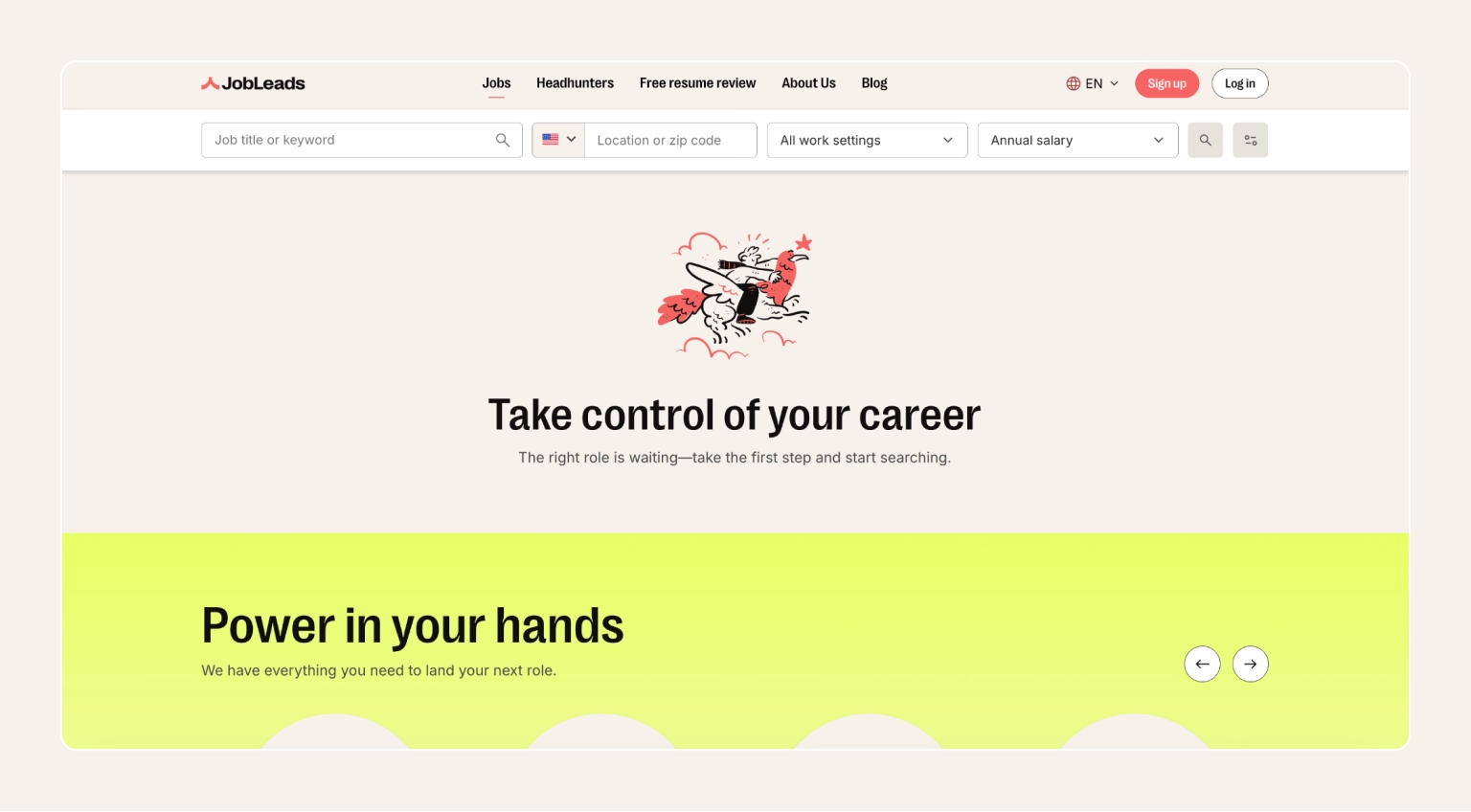
Yes–this is our tool. But we promise to be as objective as possible. And if you want to, you can read real user reviews or test the tool yourself instead of trusting our word for it.
So, JobLeads is not just a job board. It’s a career platform built entirely for job seekers. Most job platforms are funded by employers, which means they are optimized for employer needs. JobLeads flips that model: job seekers pay for the subscription, so every feature is designed around your success. With over 20 million users across 40+ countries, it’s one of the most widely used job search tools for white-collar professionals globally.
What makes it stand out as a job search platform is the combination of reach and depth. JobLeads pulls from more than 400K sources, including company career pages and a curated network of headhunters covering roles that never reach public job boards. Beyond matching, it covers the full search journey from an ATS-optimized resume builder through tailored cover letter generation, and an AI Companion for real-time guidance.
Main features:
Pricing:
Did you know that…
According to LinkedIn, over 65% of talent professionals say AI is changing how hiring works in their organizations. This means that the best AI job search tools are essential to stay competitive.
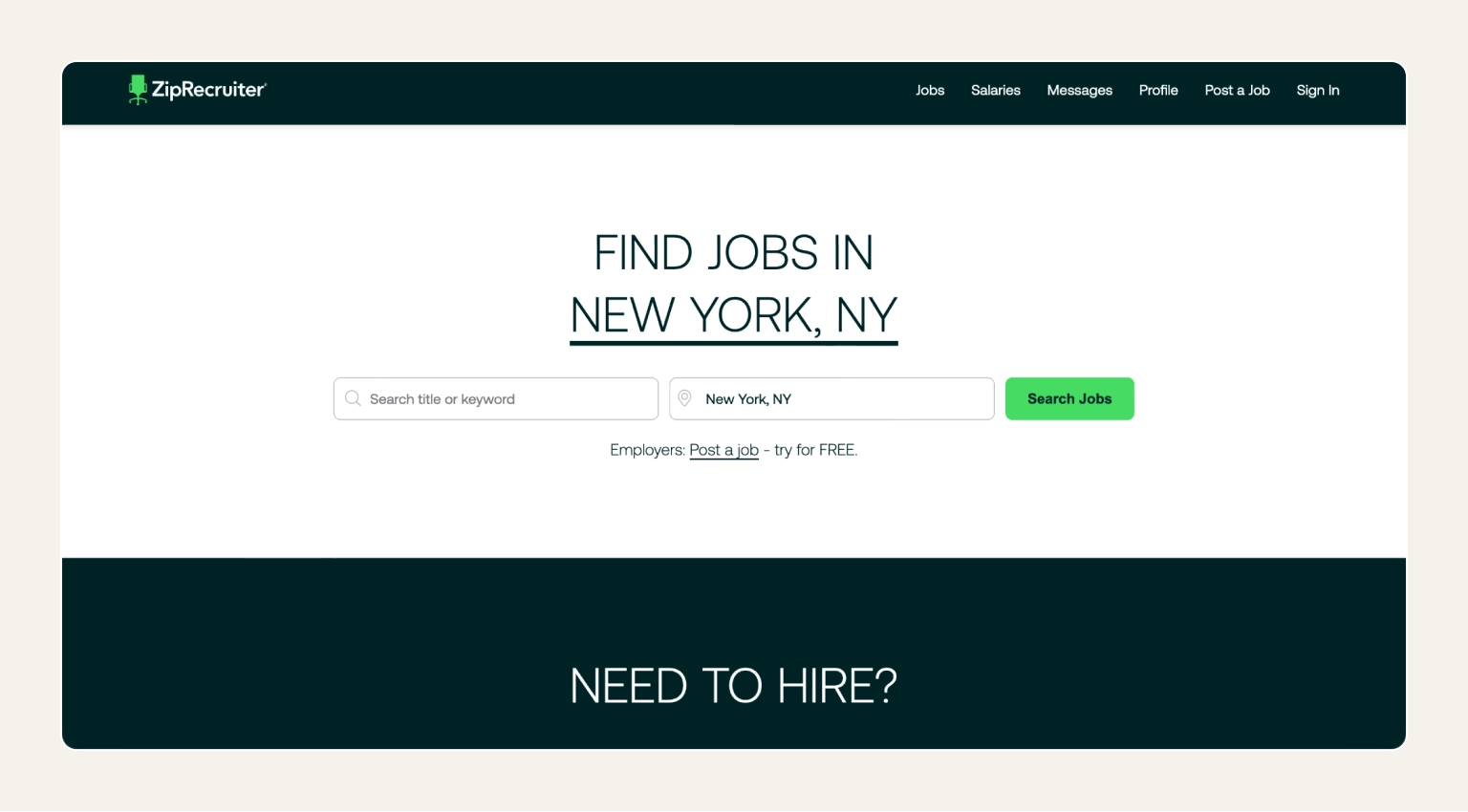
ZipRecruiter is one of the most employer-friendly hiring platforms on this list. With over 2.8 million businesses using it to hire, the volume of active listings is high and the employer engagement is real.
What makes ZipRecruiter stand out is its easy-to-use one click apply job search tool. You set up your profile once, and the platform uses AI job matching to surface relevant roles and flag your profile to employers. Also, smart job alerts notify you when a match appears. It’s one of the more genuinely smart job search tools for people who want efficiency and not just more tabs to manage. As an AI job search tool, it quietly does a lot of the heavy lifting behind the scenes.
Pros:
Cons:
Pricing:
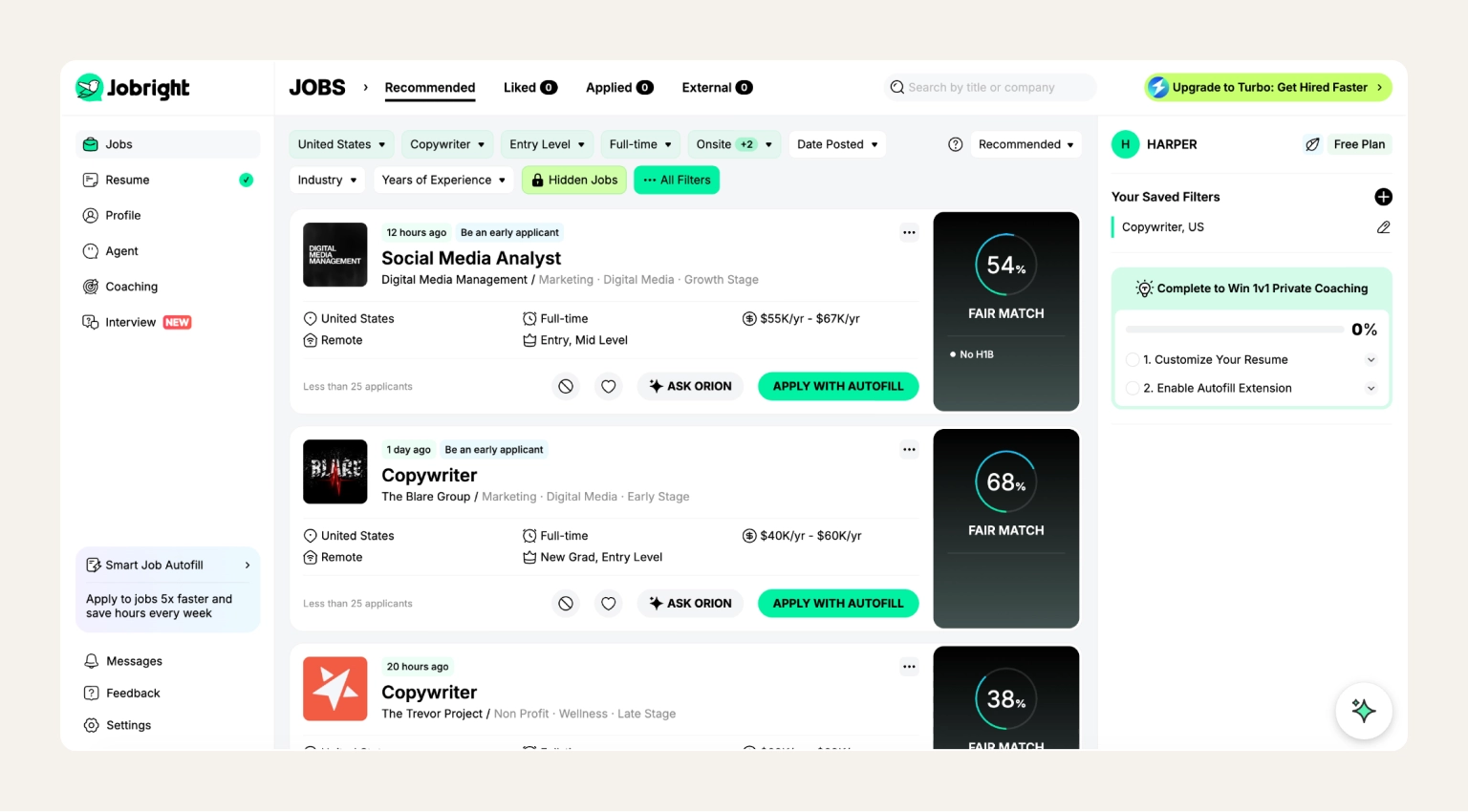
Jobright is one of the newer AI job search tools to break through, and it's quickly become a serious option for tech and professional roles. Built around AI matching and automated application support, it positions itself as an “AI copilot” for job seekers. It’s a platform that surfaces relevant roles and actively helps you apply to them faster.
What makes Jobright stand out is how aggressively it leans into automation. The AI scores how well your resume matches each posting and suggests targeted edits. For high-volume job seekers, that's a meaningful time saver. It's one of the few job hunting tools where the AI actively reduces the manual work of applying on top of just matching the right roles to your profile.
Pros:
Cons:
Pricing:
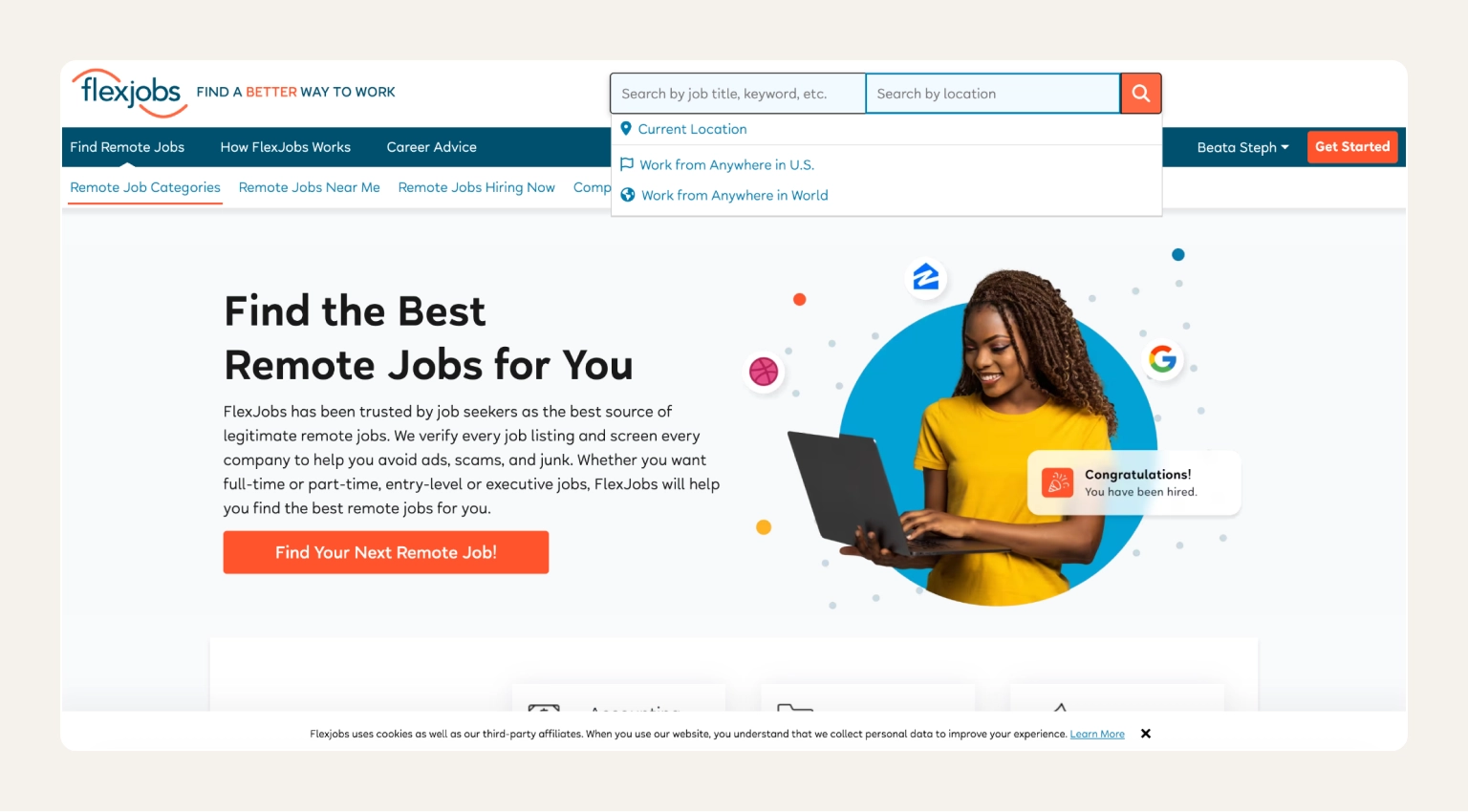
If remote or flexible work is a priority, FlexJobs is one of the best job search platforms you can use. The demand for remote jobs has created a flood of low-quality listings, scam jobs, and misleading postings. FlexJobs exists to solve exactly that problem.
Every single listing on FlexJobs is manually vetted by the team before it goes live. This way, no scams or bait-and-switch postings go unnoticed. That makes the platform one of the best hiring platforms for people who are serious about finding a legitimate remote role–whether full-time, part-time, or freelance. It’s also one of the most reliable job hunting tools in this space, and covers more than 50 job categories across multiple experience levels.
Pros:
Cons:
Pricing:
Read more: Check out JobLeads study to discover the latest remote work statistics. Also, learn about the main remote work benefits and why candidates actively choose freedom over higher salary.
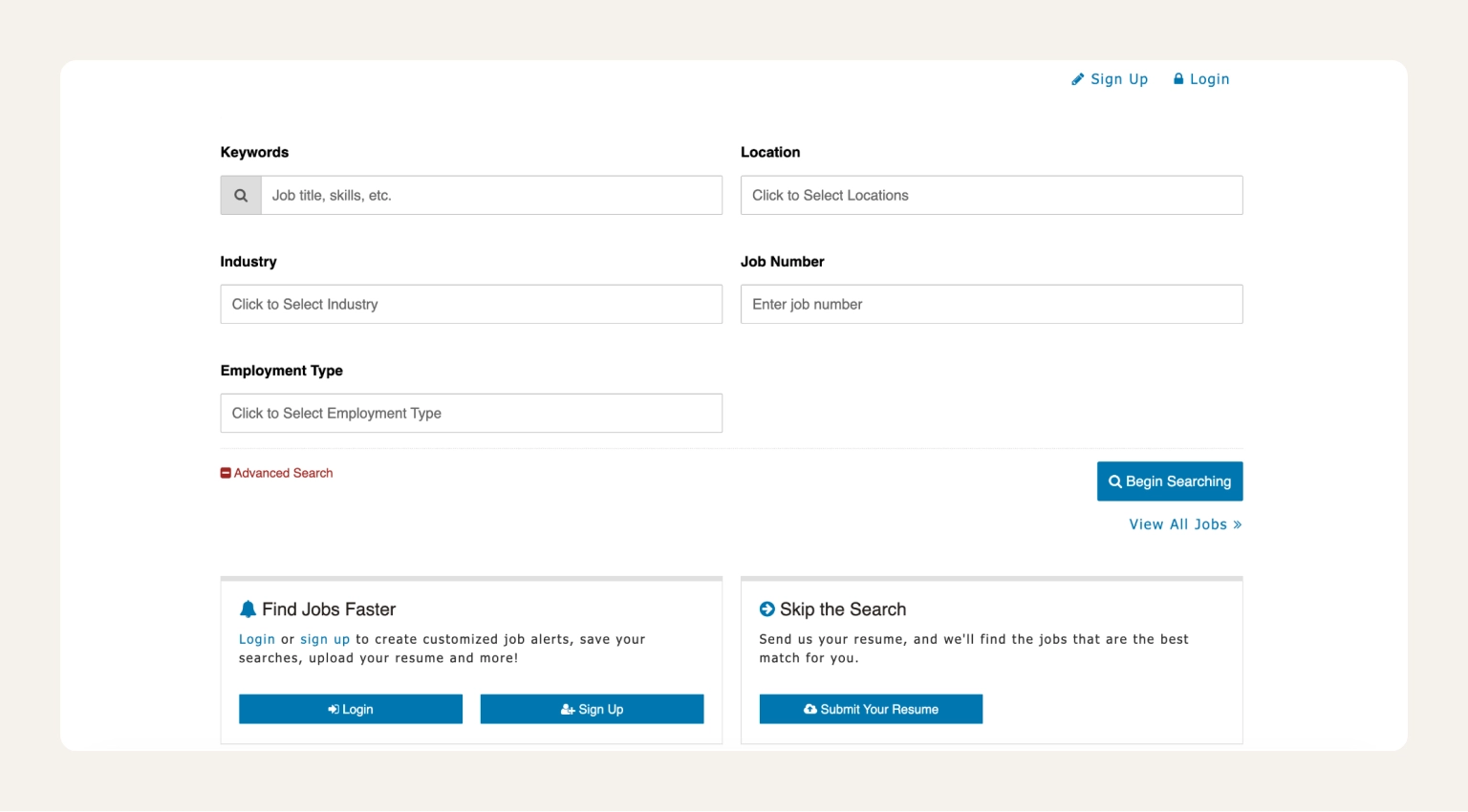
Frontline Source Group isn’t a traditional job search engine. Instead, it's a US-based staffing and recruiting firm that places candidates into temporary, contract, and direct-hire roles. With offices across multiple states and a focus on professional staffing, it's one of the more established job platforms for people who want a recruiter actively working on their behalf rather than scrolling listings alone.
What makes Frontline Source Group different is the high-touch model. Instead of applying through an automated system, you have the option to work directly with a recruiter who matches you to roles based on your background. The firm covers categories like accounting, administrative, IT, engineering, and human resources, with strong coverage across US markets. For job seekers who want a personal advocate inside the hiring process, it's a useful complement to broader job search engines.
Pros:
Cons:
Pricing:
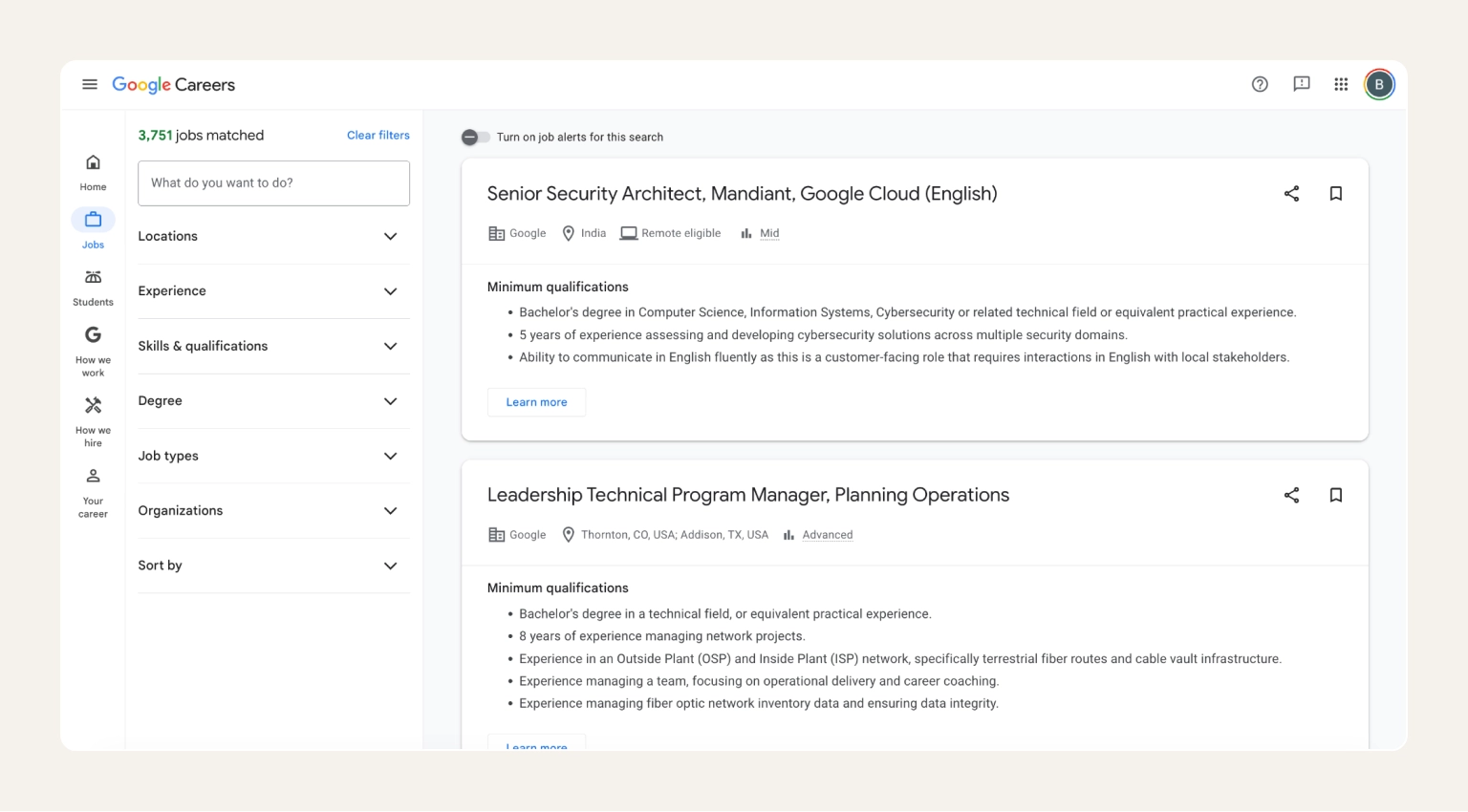
Google for Jobs is not a standalone job board. It's a job search engine aggregator built directly into Google Search, which means it has a reach no other platform can match. Google processes over 8.5 billion searches per day. Even a small slice of that traffic represents an enormous pool of people using it as a free job search tool without even realizing it.
When you search for a job title on Google, a panel of listings appears at the top of the results. It pulls from Indeed, LinkedIn, Glassdoor, ZipRecruiter, company websites, and dozens of other sources. That makes it one of the most powerful tools for job search discovery. Keep in mind that you don’t apply through Google directly, but it’s an unbeatable starting point for job searching.
Pros:
Cons:
Pricing:
Did you know that…
Google for Jobs is one of the most widely used free AI job search tools by default, and most people don't even think of it that way. If you haven't searched for your job title directly in Google recently, try it. The aggregated results might surprise you.
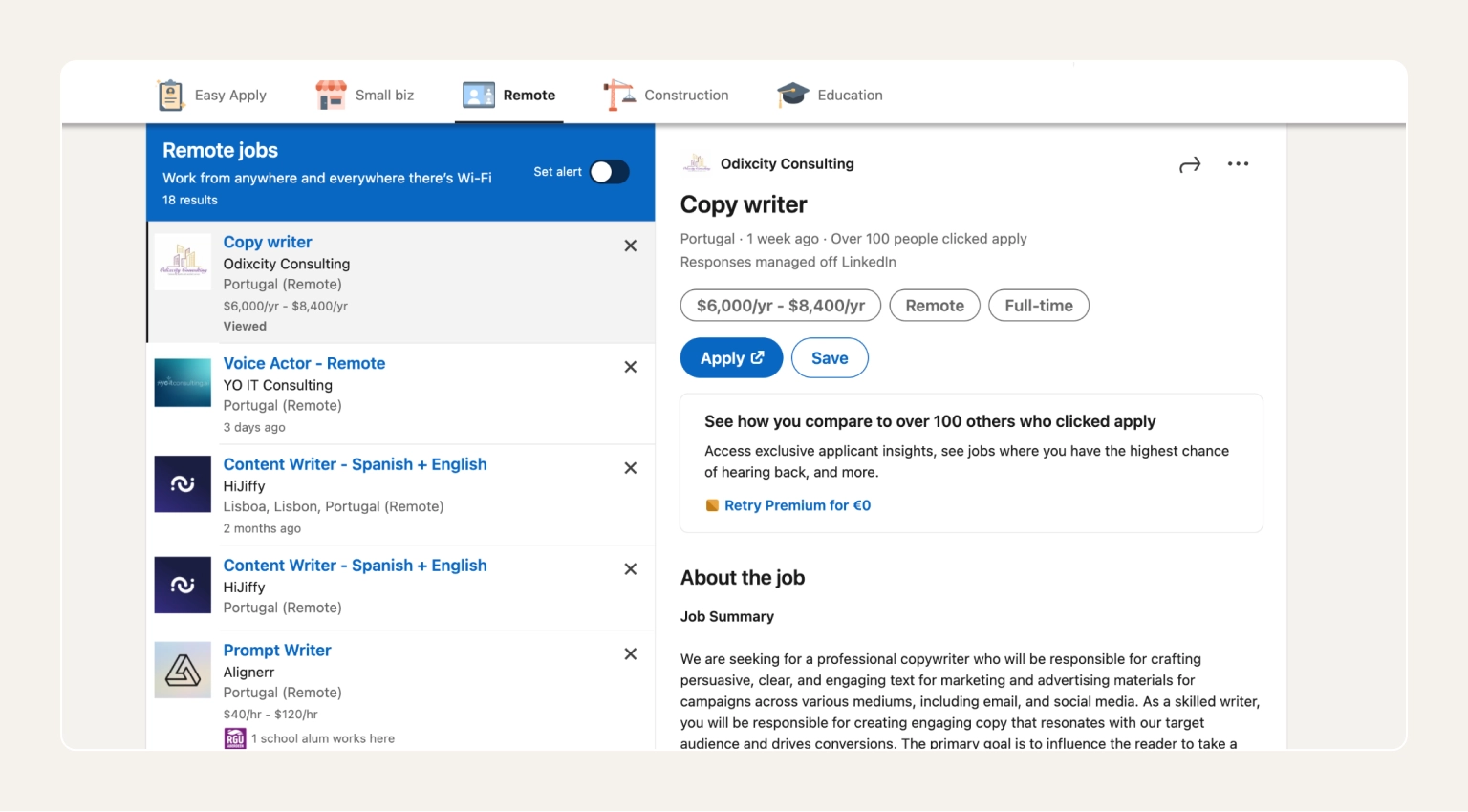
LinkedIn is a professional network with over 1 billion members across more than 200 countries. Many describe it as the Facebook for professionals. What makes the platform unique is that it combines a networking tool and job board in one. Recruiters actively search for candidates on LinkedIn, so having a strong profile there is almost non-negotiable for professionals at any level.
As a job search engine, LinkedIn lets you filter by job type, location, experience level, and company size. It also shows you mutual connections at companies you're targeting, which is a significant advantage for networking–and it becomes even better when you consider that as many as 85% of jobs are filled through networking. LinkedIn is the only top hiring platform that puts your network and your job pipeline in the same place.
Pros:
Cons:
Pricing:
Pro-tip
Optimize your LinkedIn headline with the job title you're targeting and not just your current role. Recruiters search by title, and this one change can dramatically improve how often you appear in searches.
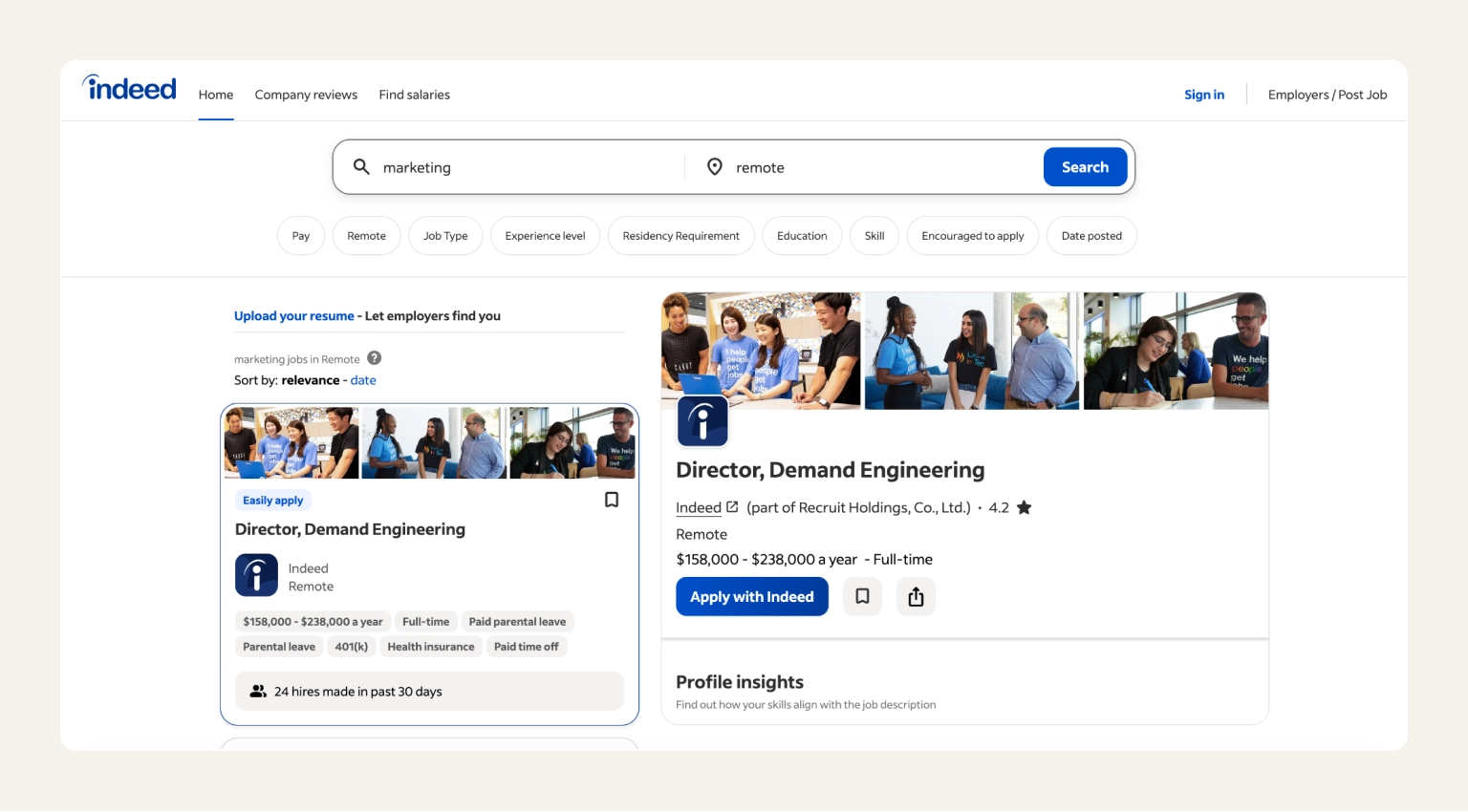
Indeed is the world's #1 job search engine by traffic, attracting over 350 million unique visitors every month. It’s the best online job search engine for sheer volume as the index is massive, the listings are updated constantly, and the platform is completely free for job seekers.
What makes Indeed one of the top job search engines is how it works as an online recruitment platform. Employers post jobs directly, and it also indexes listings from thousands of company websites. Moreover, the platform works both ways meaning that it lets recruiters find you too.
Pros:
Cons:
Pricing:
Read more: Before applying on any job search engine, make sure your resume is optimized and ready. Check out our guide on how to optimize your resume for ATS screening to make sure yours stands out.
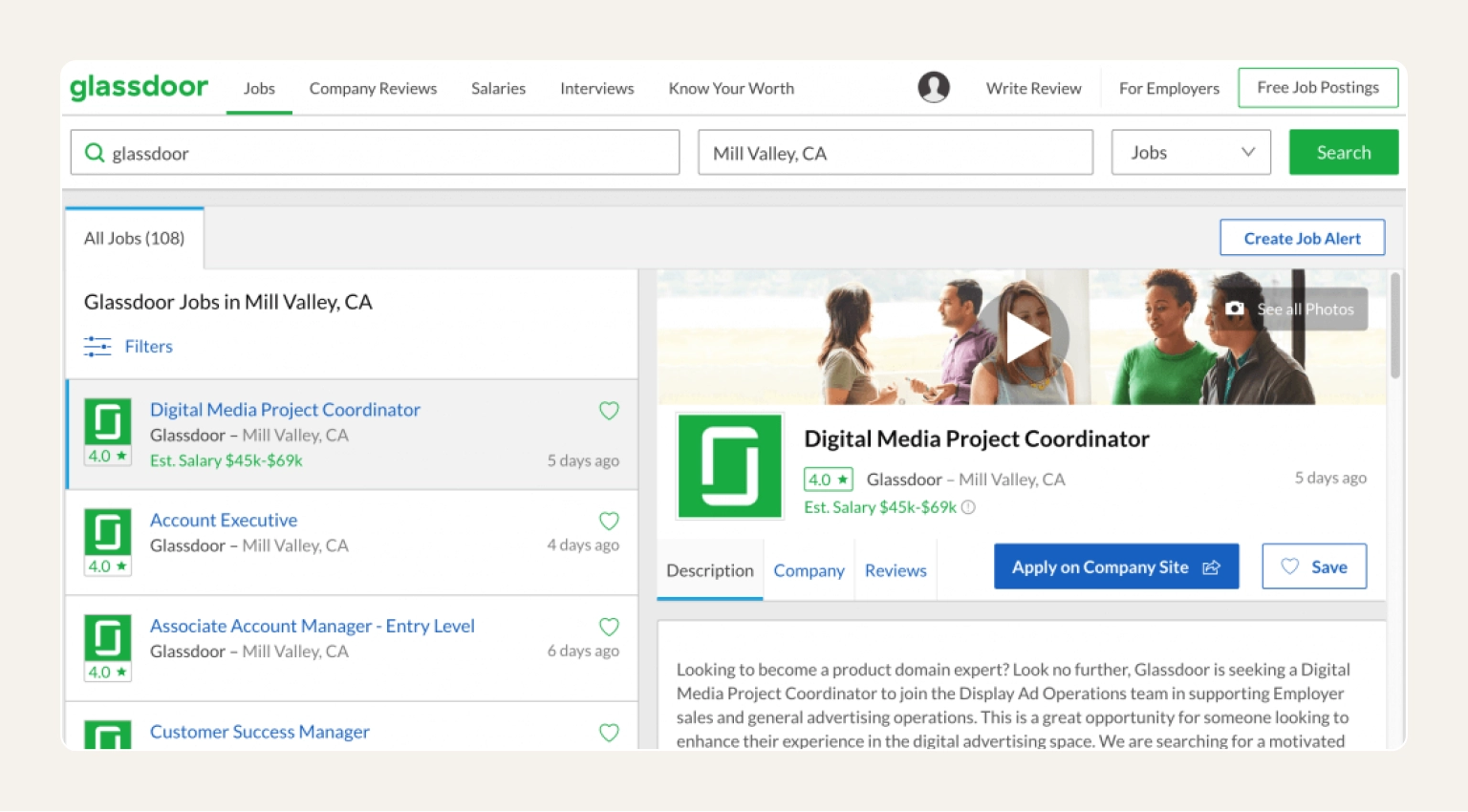
Glassdoor is one of the most useful job search platforms because it combines job listings, salary data, and employee reviews of companies in a single place. You can research a company deeply before you apply. This includes reading anonymous reviews from current and former employees, checking what the interview process looks like, and benchmarking the salary range for your target role.
That research advantage matters, especially as the average corporate job opening receives around 250 applications. Standing out requires more than just sending your resume–you need to know what the company actually values. Glassdoor is one of the few employment platforms where you can gather that intelligence.
Pros:
Cons:
Pricing:
Read more: Learn how to find a headhunter and why you should include this approach in your job search strategy.
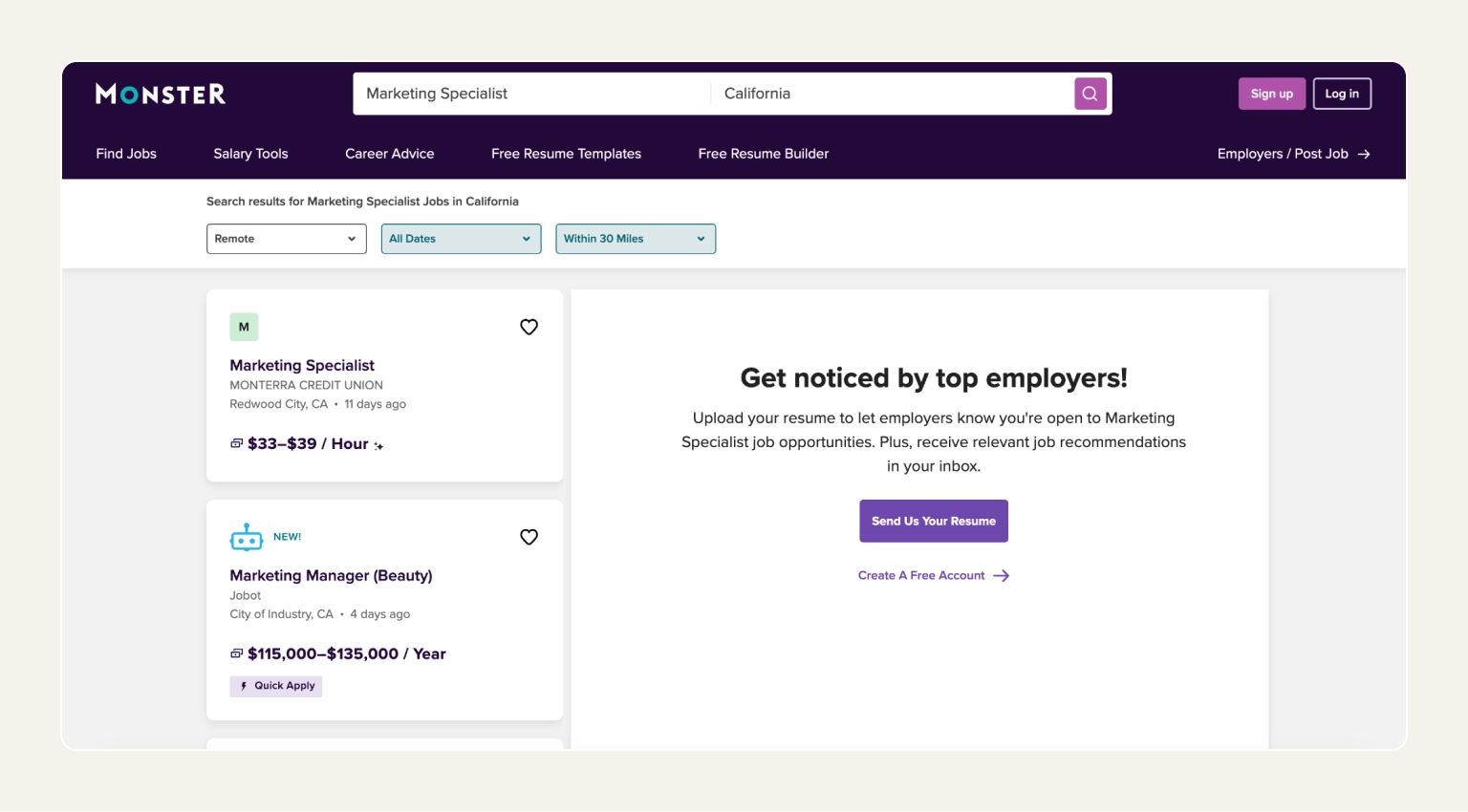
Monster is one of the original online job search tools, and it’s still a choice for broad searches, particularly in the US, UK, and Canada. It may not have the traffic of Indeed or the network of LinkedIn, but it holds its own as a top online job search tool with a large database of active listings.
What Monster brings beyond the basics is a suite of job hunting tools like a resume builder, salary comparison data, and career advice resources. For job seekers at any level, the platform is free and covers a wide range of industries.
Pros:
Cons:
Pricing:
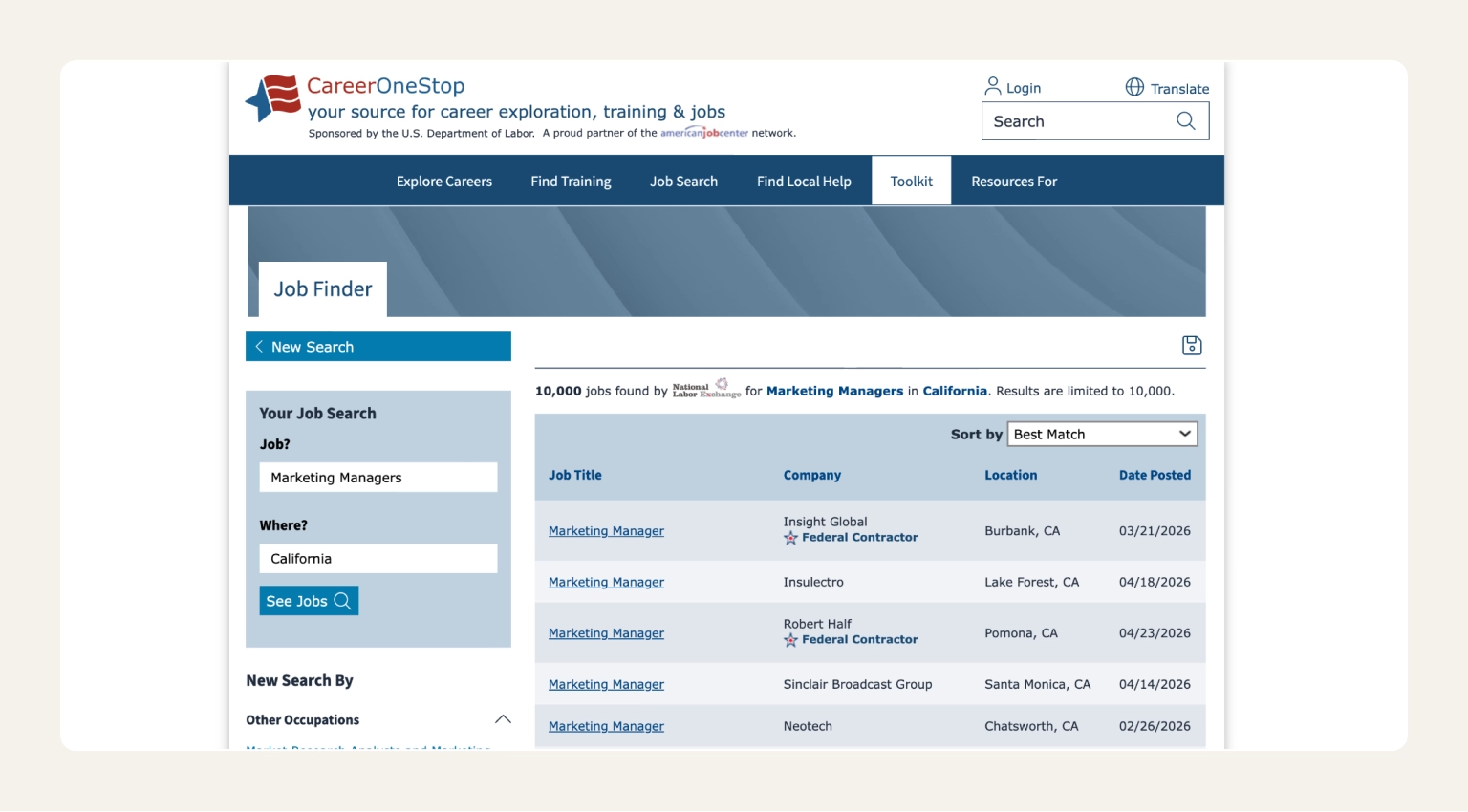
CareerOneStop is one of the most overlooked free job search tools in the US. Sponsored by the U.S. Department of Labor, it aggregates millions of job listings from across the web while also serving as a full career resource hub. For job seekers who want training programs, salary research, certification info, and local employment services on top of a job search tool, it's one of the most comprehensive employment platforms available.
What makes CareerOneStop unique is the public-sector backing. The platform pulls listings from across the web and pairs them with information you usually have to dig for elsewhere. These include certifications matter in your field, where to find local workforce assistance, what training programs are funded in your state. It's especially useful for career changers and workers re-entering the labor market, but the job search itself works for any level.
Pros:
Cons:
Pricing:
Not all the best job search tools will be right for you. The most reliable job search engine depends on where you are in your career, what kind of role you're targeting, and how you prefer to search.
Here’s a simple framework for figuring out what the best tools are for your job search right now:
By career level:
By job type:
By location:
Bottom line–
The best job search engine for you is the one that matches your career level and job type. Use at least two. A broad search engine like Indeed or Google for Jobs combined with a specialist tool like JobLeads gives you the widest possible reach.
From a university student searching FTP directories in 1990 to AI matching you to your next role in seconds, search has come a long way. So has the job market.
The tools on this list reflect that shift. Some are built for discovery, others for speed or the hidden roles that never make it to a public job board. None of them do everything equally well, which is exactly why using just one is leaving opportunity on the table.
The good news is that you don’t have to choose just one.
Start with a broad job search engine like Indeed or Google for Jobs to cover the full market. Layer in LinkedIn for your professional network and add a specialist tool based on your goals.
The best job search engine is the one that works for you. And the best job search strategy uses more than one.

Content & Insight Writer
Beata creates content that puts job seekers first. From practical blog advice to first-hand research studies, her writing is designed to give people the clarity and confidence to find the role they deserve.
Job SearchGet recruiter tips straight from the source. From tailoring your resume to following up after interviews, here’s what hiring managers actually want to see.
 Resume
Looking for an AI resume builder to help with your CV? Compare the best AI resume writing tools, paid and free, based on the main features and top use cases.
 Job Interviews
Use ChatGPT to practice interview questions, craft tailored responses, and hold mock interviews. Learn 5 key questions and prompts for effective interview preparation.