
 Job Search
June 12, 2026
10 Proven Ways to Find Industry‑Specific Headhunters Quickly
Learn 10 proven strategies to connect with specialized headhunters using directories, AI tools, networking, and referral programs for targeted job searches.


A brilliant resume rarely gets you in front of the right decision-maker on its own. That's why headhunters exist. Companies pay them to find people who aren't job hunting, and approach them discreetly.
A headhunter usually works for an external agency, not the hiring company itself. Executive headhunters run retained searches for senior leadership and board-level roles. Others fill specialist and manager-level positions, usually on contingency.
This guide covers the best executive headhunter firms, top picks for job seekers, how fees work and who pays them, and the questions people ask most before working with one.
Skip the wait for a headhunter's call and get matched to relevant roles now.
JobLeads shortlisted top headhunter companies by search specialty: executive vs. specialist/manager-level. Beyond specialty, the shortlist also weighs industry breadth, geographic reach, and public reputation, drawing on each firm's website, Trustpilot reviews, and industry coverage.
Firms that don't publish transparent placement practices, or that candidates commonly flag for pay-to-play behavior, were excluded.
Read more: Haven't pinned down the right headhunter for your specific industry yet? Check out this guide on how to find a headhunter.
Executive headhunters work for the employer on a retainer. They run confidential searches for senior leadership and board roles, often approaching people who aren't job hunting.
Recruiters usually work on contingency, so they only get paid when a hire happens. They fill specialist and manager-level roles from a wider pool of active candidates.
| Executive headhunter | Recruiter | |
|---|---|---|
| Roles | C-suite, VP, board | Specialist, manager, general |
| Paid | Retainer, win or lose | Only on placement |
| Who reaches out | They approach you | Usually you approach them |
Not aiming for the C-suite? Jump to the best headhunters for job seekers.
Pro-tip
If a "headhunter" you don't know asks you to pay a fee to be considered for a role, that's a red flag. It's also a hallmark of recruitment scams job seekers should know how to spot. Legitimate headhunters and recruiters are always paid by the employer, never by the candidate.
Read more: For advice on how to impress the recruiters and land more interviews, check out this tips from recruiters guide.
Five firms dominate C-suite and board searches worldwide: Spencer Stuart, Heidrick & Struggles, Russell Reynolds Associates, Egon Zehnder, and Korn Ferry. Insiders call them the Big Five, sometimes shortened to "SHREK" after their initials. The other five on this list are smaller or more specialized, and often quicker on a single mid-market search. Here's where each one is strong and how its fees work.
| Firm | Best known for | Industry focus |
|---|---|---|
| Korn Ferry | Broadest global reach + leadership consulting | All industries, especially large enterprise |
| Heidrick & Struggles | Board and CEO search | Financial services, technology, industrial |
| Russell Reynolds Associates | Digital-first leadership search | Technology, consumer, financial services |
| Spencer Stuart | Board director search + succession planning | All industries, strong in financial services |
| Egon Zehnder | Leadership advisory alongside search | Global, strong in Europe/APAC |
| Odgers Berndtson | Mid-market to large enterprise executive search | All industries, strong in UK/Europe |
| Boyden | Boutique feel with global network | Mid-market, industrial, healthcare |
| DHR Global | Faster turnaround for mid-market searches | Industrial, healthcare, consumer |
| True Search | Tech and growth-company focus | Technology, private equity-backed companies |
| ZRG Partners | Data-driven candidate assessment | All industries |

Korn Ferry is the largest executive search firm in the world by revenue, and one of the few in this space that's publicly traded (NYSE: KFY). Founded in 1969 by Lester Korn and Richard Ferry in Los Angeles, it has grown far beyond pure search into a full organizational-consulting business. That breadth is exactly why it tends to win the largest, most complex global mandates: a Fortune 500 board gets access to Korn Ferry's entire talent-and-org-design apparatus.
Pros:
Cons:
Heidrick & Struggles, founded in Chicago in 1953, is one of the original Big Five firms. It has built its reputation specifically around board and CEO-level work, including board director search, CEO succession planning, and governance advisory, with particular depth in financial services and technology. Its Heidrick Consulting arm extends into leadership assessment and organizational culture work, positioning the firm as much as an advisor to the board as a recruiter for it.
Pros:
Cons:
Founded in 1969 by Russell S. Reynolds Jr. and still privately held, Russell Reynolds has carved out a reputation as the more digitally-native of the Big Five. It leans into leadership searches for companies navigating digital transformation, pairing traditional retained search with a heavier emphasis on data-backed assessment methodology. That combination has made it a common choice for both legacy enterprises modernizing and high-growth tech companies scaling up their leadership bench.
Pros:
Cons:
Spencer Stuart, founded in Chicago in 1956 and structured as a private partnership, is best known for board director search and CEO succession planning. Often the firm boards call before they even have an open role, purely for succession contingency planning. Alongside search, it publishes governance and leadership research that's widely cited in the space, reinforcing its position as much an advisory firm to boards as a recruiter.
Pros:
Cons:
Egon Zehnder, founded in Zurich in 1964, is structurally unlike most of its Big Five peers. It's a private partnership with no external shareholders, and its partners famously share profits on a formula that isn't purely tied to individual billings. This is a culture point the firm leans into as a differentiator. It pairs executive search with ongoing leadership advisory work, and its office network is particularly deep across Europe and Asia-Pacific relative to its American rivals.
Pros:
Cons:
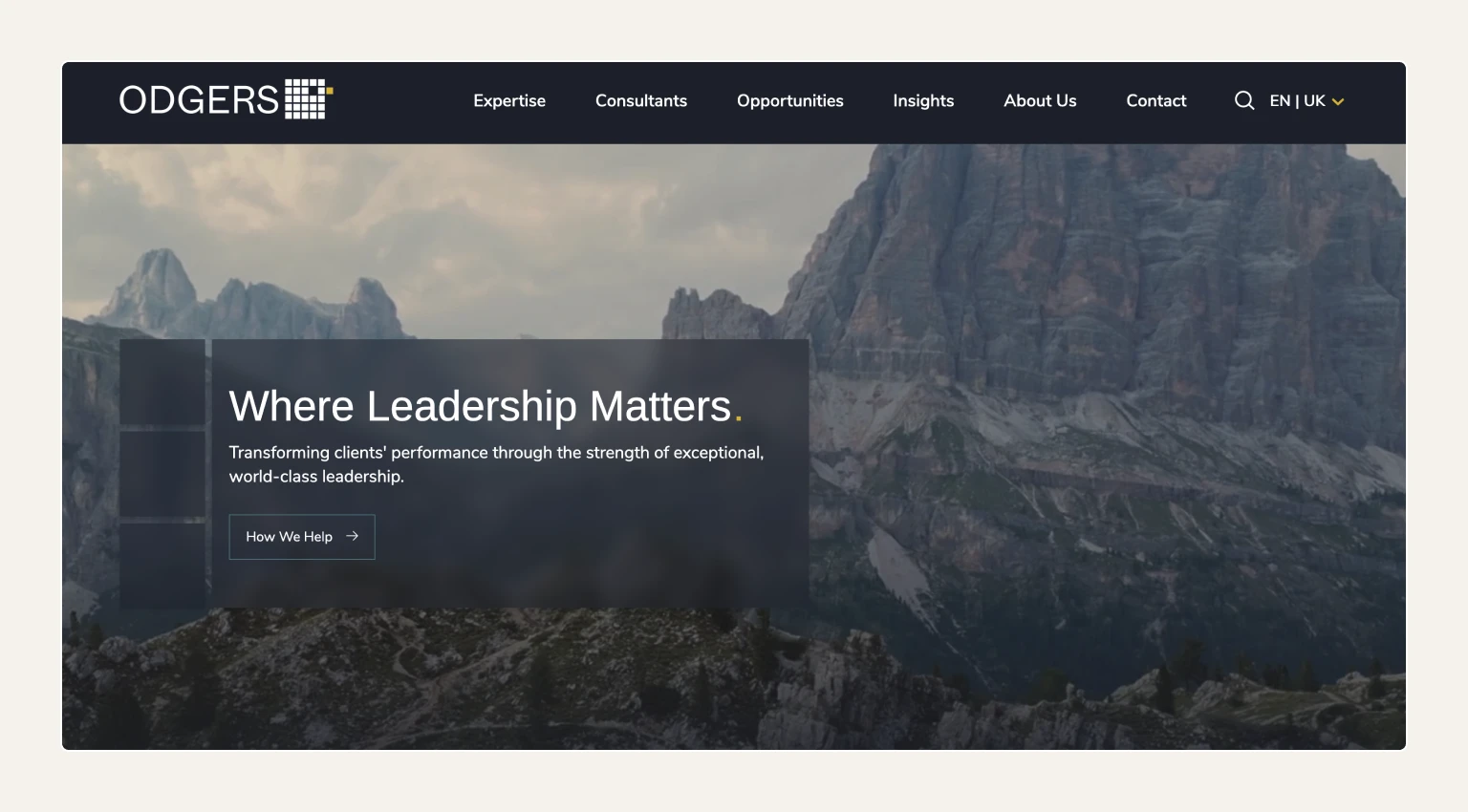
Founded in the UK in 1958 and still operating as a partnership, Odgers Berndtson has a long history serving not just corporate clients but public sector and nonprofit organizations too. This niche gives it a different client mix than the more corporate-heavy Big Five. Its coverage is strongest across the UK and Europe, and it tends to compete well for mid-market and large-enterprise mandates that don't need the absolute largest global firm.
Pros:
Cons:
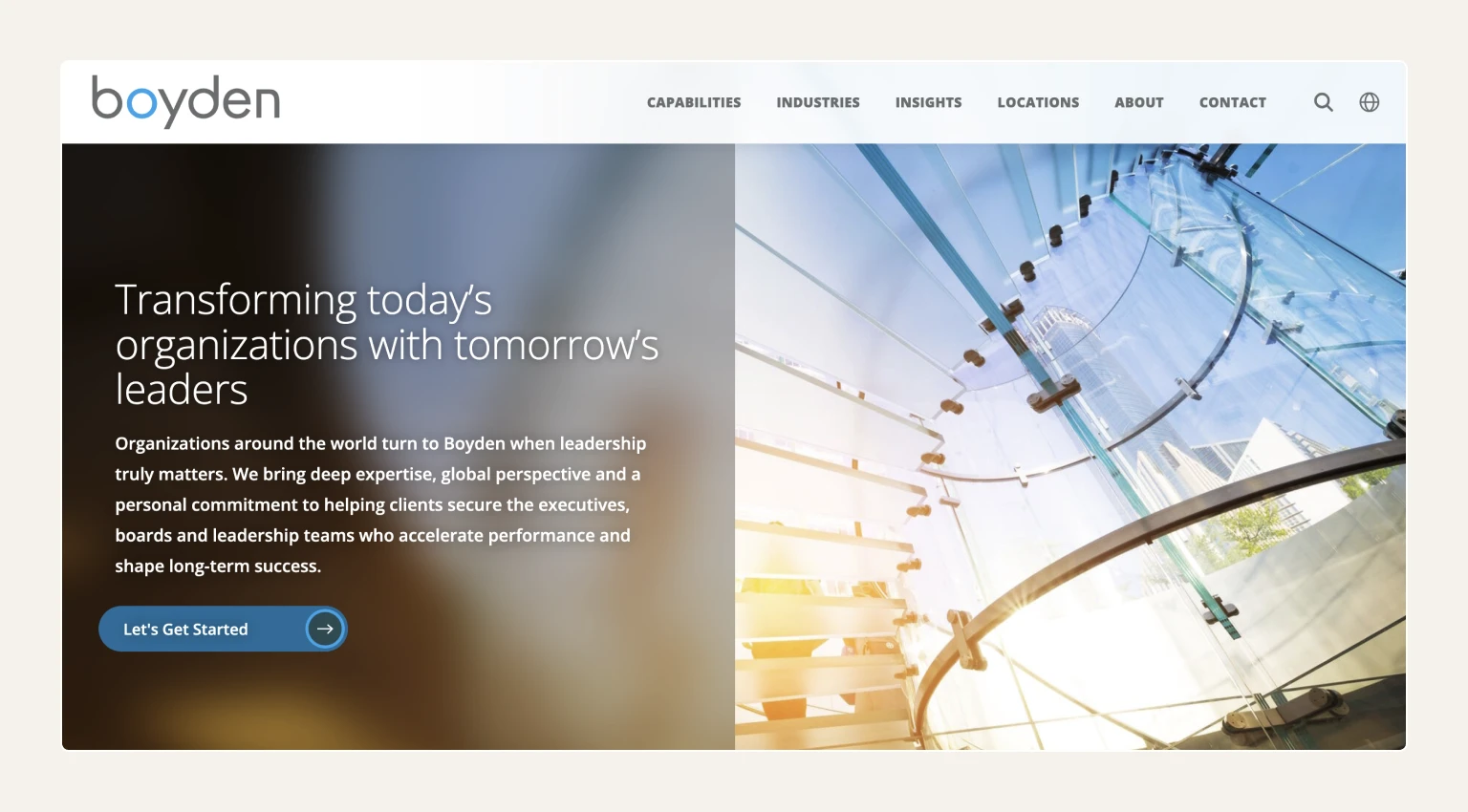
Boyden, founded in 1946, is one of the oldest names in executive search. It operates on a distinctive model of a network of partner-owned offices rather than one centralized global firm. That structure gives clients a more boutique, high-touch relationship with a specific partner, while still tapping into a genuinely global network when a search crosses borders. It's a trade-off between consistency and personalization worth knowing about upfront.
Pros:
Cons:
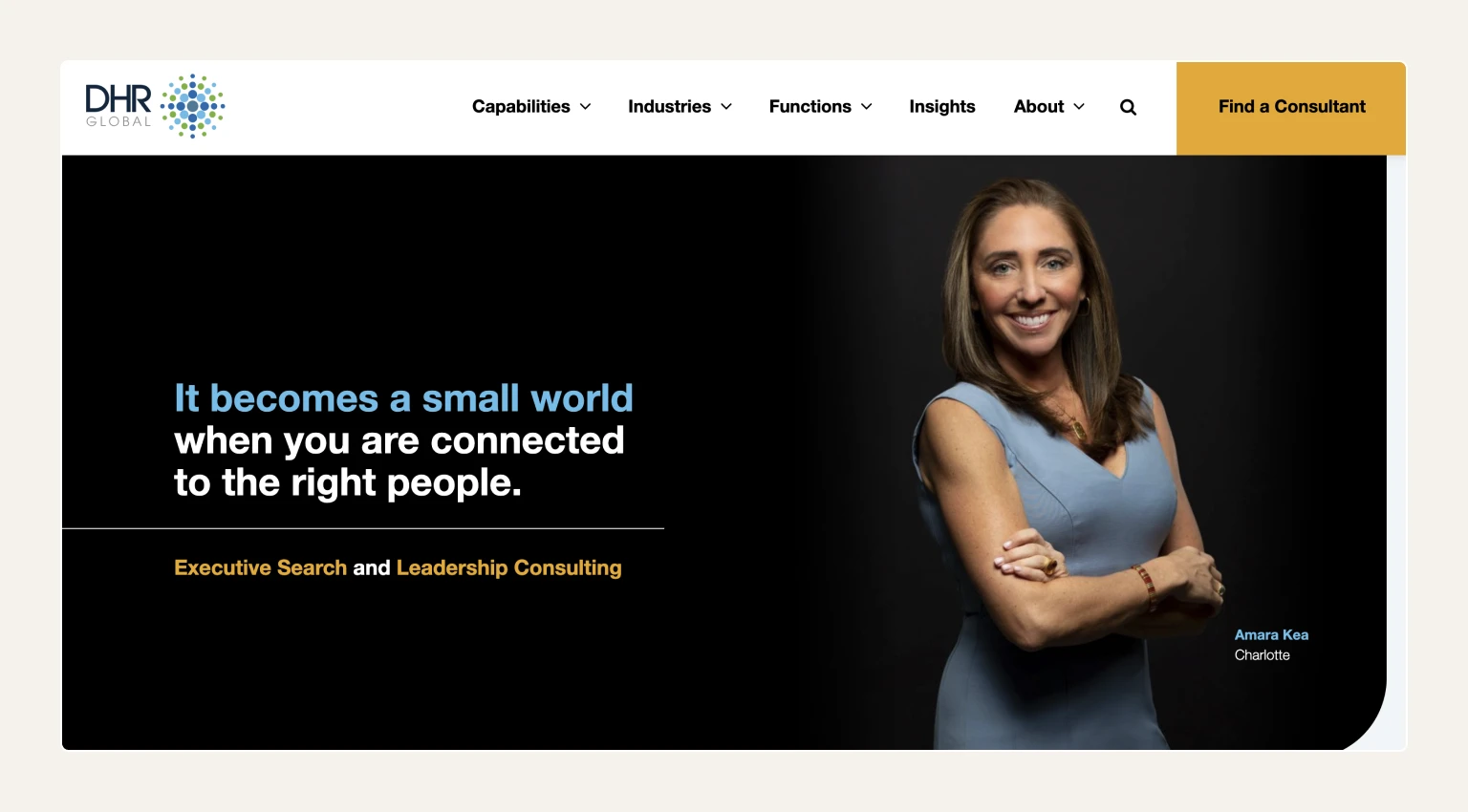
DHR Global, founded in Chicago in 1989, is a large independent (privately held) firm that positions itself as leaner and faster than the giants on this list, particularly for mid-market executive searches. It has built specific depth in industrial, healthcare, and consumer sectors, and its pitch to clients is speed and senior-partner attention without the bureaucracy that can come with a much larger global firm.
Pros:
Cons:
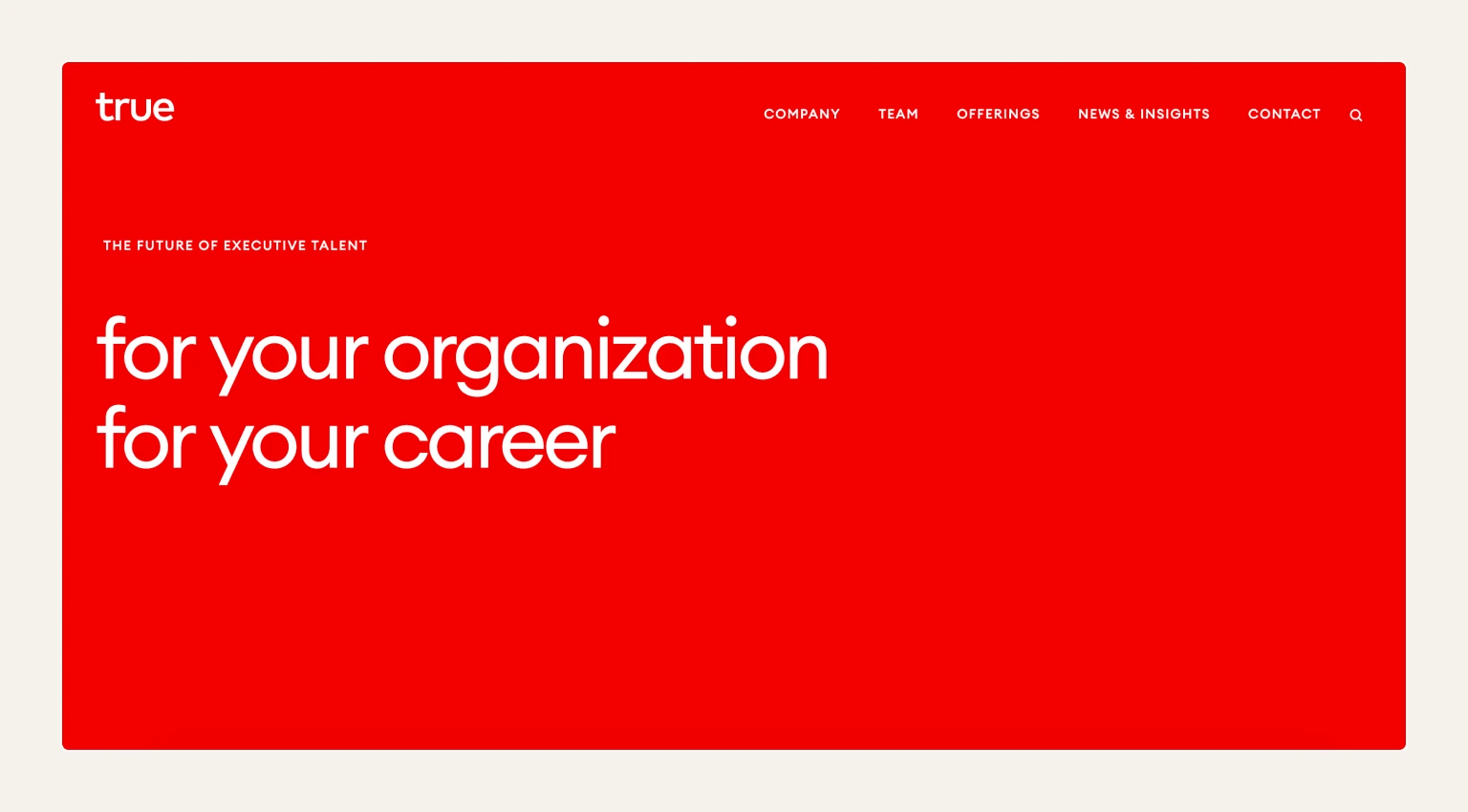
True Search is a genuinely newer entrant, founded in 2012, and it wears that youth as a selling point. It was built specifically around technology and private equity as well as venture-backed growth companies, rather than retrofitting a legacy practice to serve them. Founder-led and less bureaucratic by design, it markets itself as faster and more founder-friendly than the century-old firms it competes against for the same tech mandates.
Pros:
Cons:

ZRG Partners, founded in 2001 and headquartered in New Jersey, differentiates on data. It layers proprietary assessment and analytics tools onto the traditional search process to evaluate candidates beyond gut instinct and reference checks. It also offers more flexible engagement models than the strictly-retained approach some larger firms insist on. This can matter for clients who want to test the model before committing fully.
Pros:
Cons:
If you're not interviewing for a C-suite position, these job headhunters are far more likely to be the ones calling–or the ones worth reaching out to yourself. They recruit across specialist and manager-level roles, usually on a contingency basis. That makes them free headhunter services for candidates, since the employer pays.
Contacting headhunters is worth folding into your own job search strategy rather than relying on public postings alone.
| Firm | Best known for | Industry focus |
|---|---|---|
| Robert Half | Broadest specialist coverage (finance, tech, admin) | Finance, accounting, technology, admin |
| Michael Page (PageGroup) | Mid-to-senior specialist and manager roles | All industries, strong in finance/legal |
| Hays | Large-scale specialist recruitment | IT, construction, finance, life sciences |
| Robert Walters | Professional and managerial roles | Finance, legal, tech, strong internationally |
| LHH (Lee Hecht Harrison) | Career transition + recruitment combined | All industries |
| Randstad | High-volume specialist and temp placement | All industries |
| ManpowerGroup | Large-scale staffing across skill levels | All industries |
| Kelly Services | Flexible and specialist staffing | Education, science, admin, engineering |
| Adecco | Global staffing across industries | All industries |
| Insight Global | IT and specialist staffing | Technology, healthcare, government |
Did you know that…
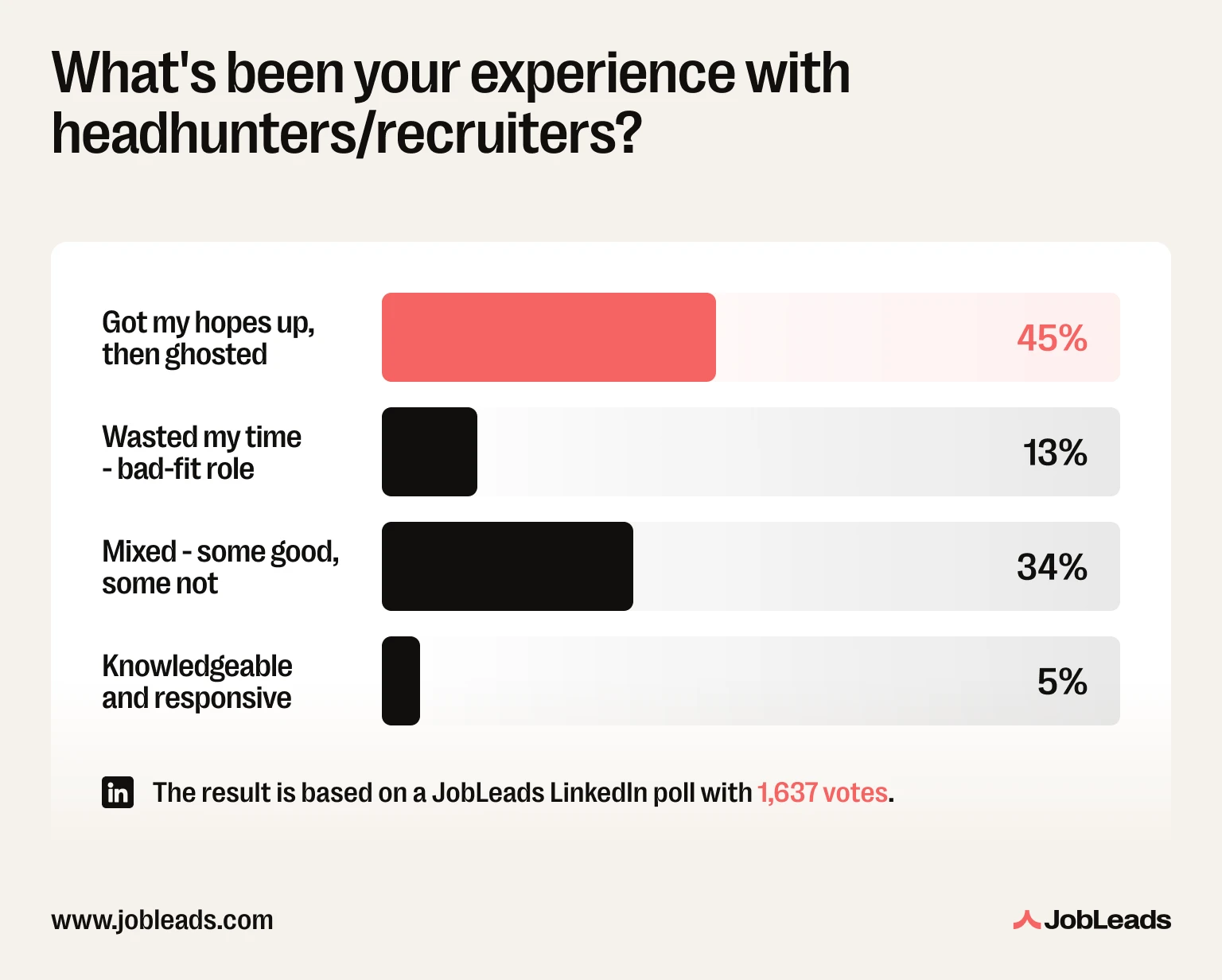
Headhunters don't always leave a good impression. JobLeads surveyed professionals about their experience with headhunters and recruiters. Nearly half (46%) said the recruiter "got my hopes up, then ghosted." Another 35% called it mixed, and 14% felt it wasted their time on roles that didn't fit. Choosing the right firm for your level makes a real difference.
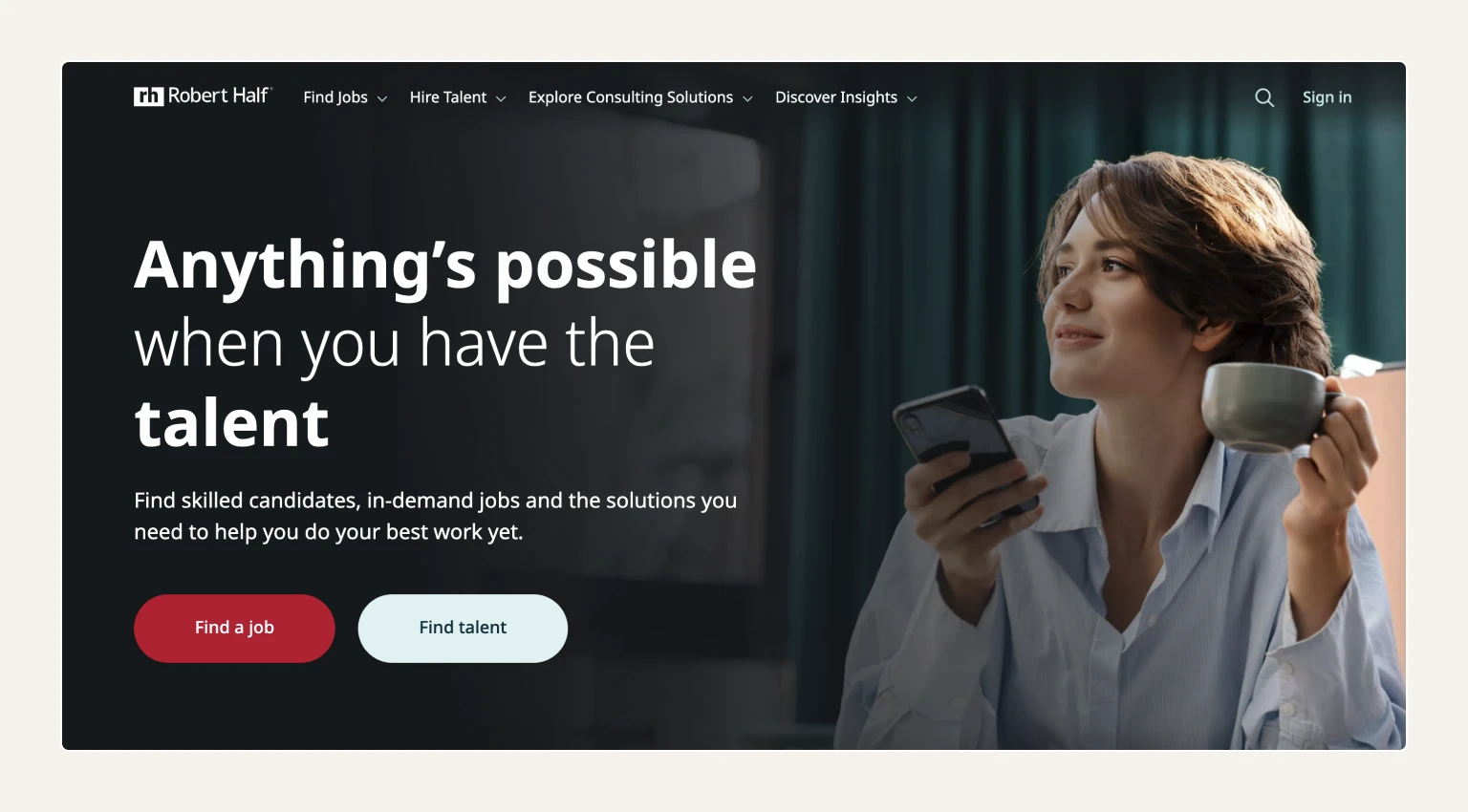
Robert Half, founded in 1948, is one of the oldest staffing firms still operating. This headhunter agency built its name specifically in finance, accounting, and administrative recruiting before expanding into technology. It also owns Protiviti, a global consulting firm, and runs its own executive search division separately from its core specialist-staffing business. So the "Robert Half" a job seeker encounters depends heavily on which part of the business is calling.
Pros:
Cons:
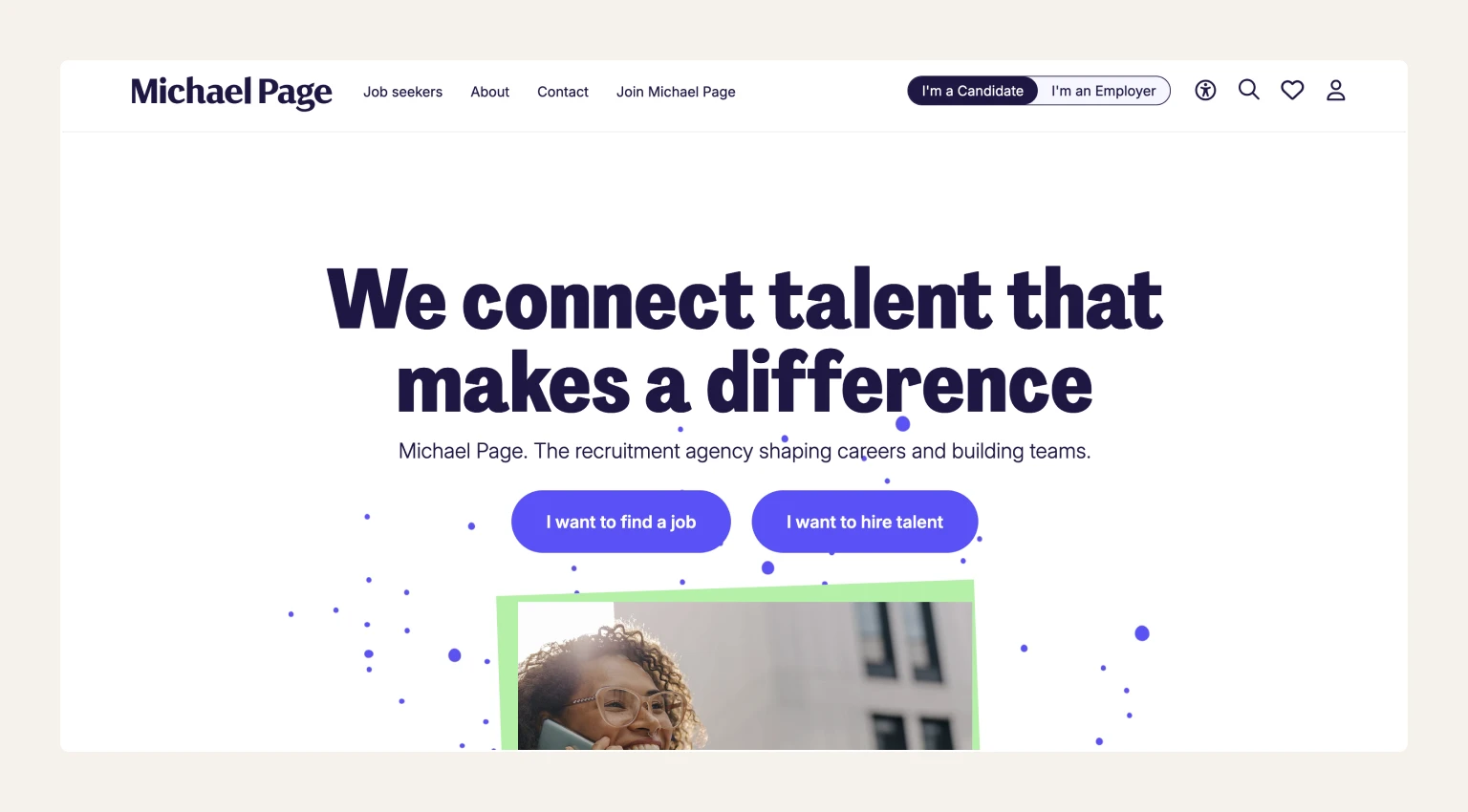
Michael Page, founded in London in 1976 and now the flagship brand of the publicly listed PageGroup, actually operates across three tiers depending on seniority: Page Personnel for more junior roles, Michael Page for mid-to-senior specialist and manager positions, and Page Executive for genuine executive search. That tiering means the experience and the level of roles surfaced can vary a lot depending on which brand within the group a candidate is actually dealing with.
Pros:
Cons:
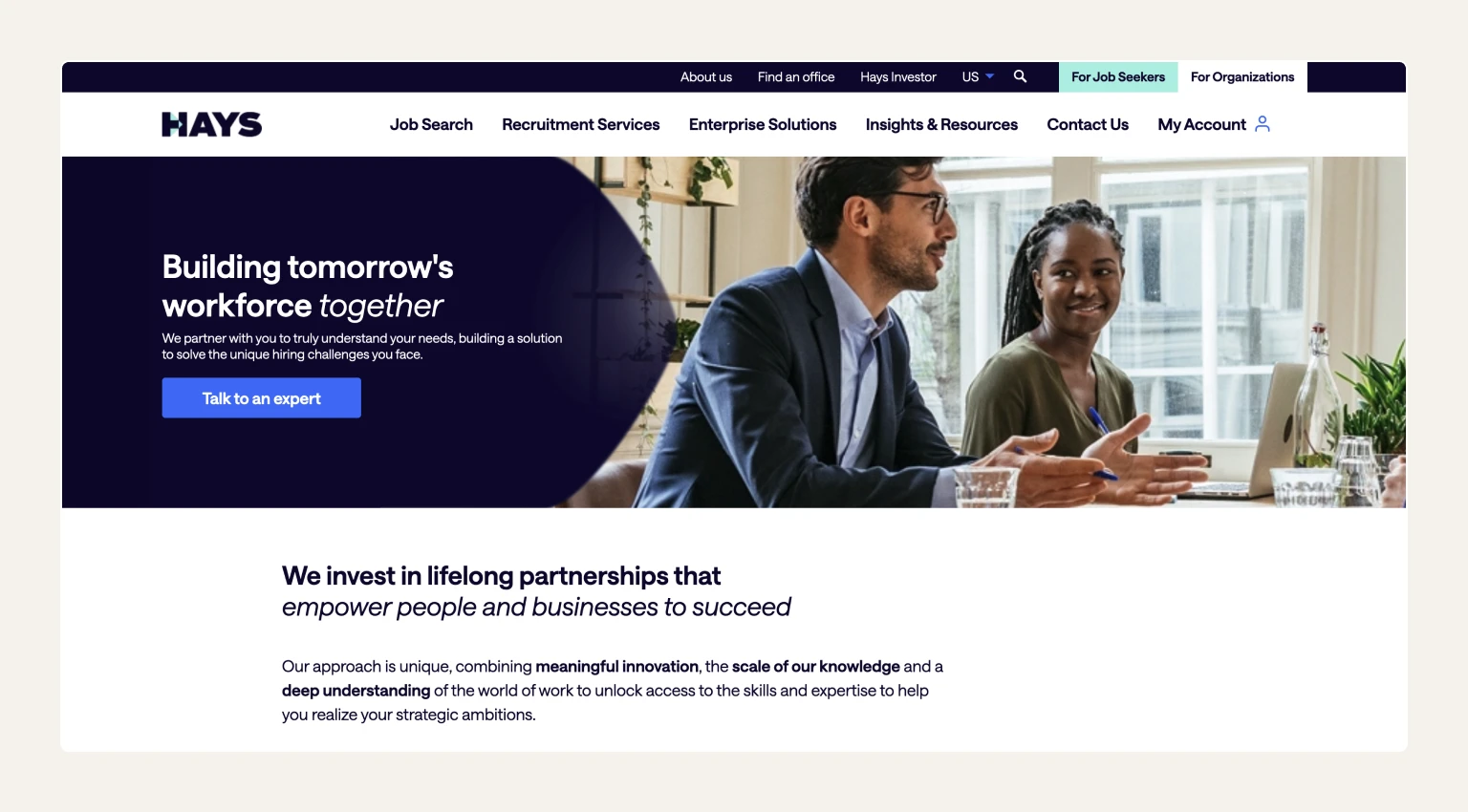
Hays, founded in the UK in 1985 and listed on the London Stock Exchange, is one of the largest specialist recruiters globally. It offers dedicated divisions covering IT, construction and property, finance, and life sciences. Its footprint is strong outside North America with the UK, Australia, and parts of Asia in particular. This makes it a stronger bet for candidates open to international moves than for a purely US-based search.
Pros:
Cons:

UK-founded, in 1985, and London-listed, Robert Walters built its reputation on professional and managerial recruitment with an international bent, particularly strong across Europe and Asia-Pacific. Its consultants tend to specialize in both industry and geography. This typically means deeper sector knowledge but also less breadth than some of the larger generalist staffing firms on this list.
Pros:
Cons:

LHH, part of the Swiss-headquartered Adecco Group, has a slightly different origin story than the rest of this list. It built its name in outplacement and career transition services–the support companies buy for employees they're laying off. That was before the firm grew into a broader recruitment business. The agency's history means it often brings a more career-coaching-oriented lens to recruitment than a pure placement firm would.
Pros:
Cons:
Randstad, a Dutch multinational founded in 1960 and listed on Euronext Amsterdam, is one of the largest staffing companies in the world by revenue. It has a portfolio that spans specialist recruitment, high-volume temporary staffing, and digital/tech-enabled matching tools it's invested heavily in recent years. Its scale means enormous reach, but also more variability in the day-to-day experience depending on which local office and consultant a candidate lands with.
Pros:
Cons:
ManpowerGroup, founded in the US in 1948 and listed on the NYSE, operates under a multi-brand structure. It combines Manpower for general staffing, Experis for IT and professional specialist recruiting, and Talent Solutions for broader workforce consulting. That umbrella structure gives it enormous breadth, from entry-level staffing to IT specialist placement. However, it can also mean a candidate isn't always sure which brand within the group they're actually interacting with.
Pros:
Cons:

Kelly Services, founded in Detroit in 1946 (originally as "Kelly Girl Service"), is one of the oldest staffing companies in the US and is Nasdaq-listed. It has built dedicated specialist practices in areas like science, education, and engineering. These go deeper than its general staffing roots would suggest, alongside a long-standing reputation specifically in flexible and temporary work arrangements.
Pros:
Cons:
Adecco was formed in 1996 from the merger of France's Ecco and Switzerland's Adia and is now listed on the SIX Swiss Exchange. It's one of the largest staffing companies in the world by headcount. It operates through a wide portfolio of sub-brands (including owning LHH), giving it genuinely enormous global office coverage. Although, that scale can mean less individualized attention than a boutique specialist recruiter offers.
Pros:
Cons:
Insight Global, founded in Atlanta in 2001 and still privately held, grew rapidly on the strength of IT and specialist technical staffing. This firm remains notably US-focused compared to the multinational staffing giants on this list. That US concentration, plus a reputation for a faster-moving, high-touch recruiter relationship, makes it a strong fit specifically for domestic IT, healthcare, and government-contracting placements. But it's less strong for anyone looking for international mobility.
Pros:
Cons:
Did you know that…
Ghosting cuts both ways. A recruiter reaching out first, then ghosting after the candidate responds, is a major red flag to 45% of professionals in a JobLeads survey. That's enough for them to never apply over it. Another 40% said it still left a negative impression, even if they'd keep engaging.
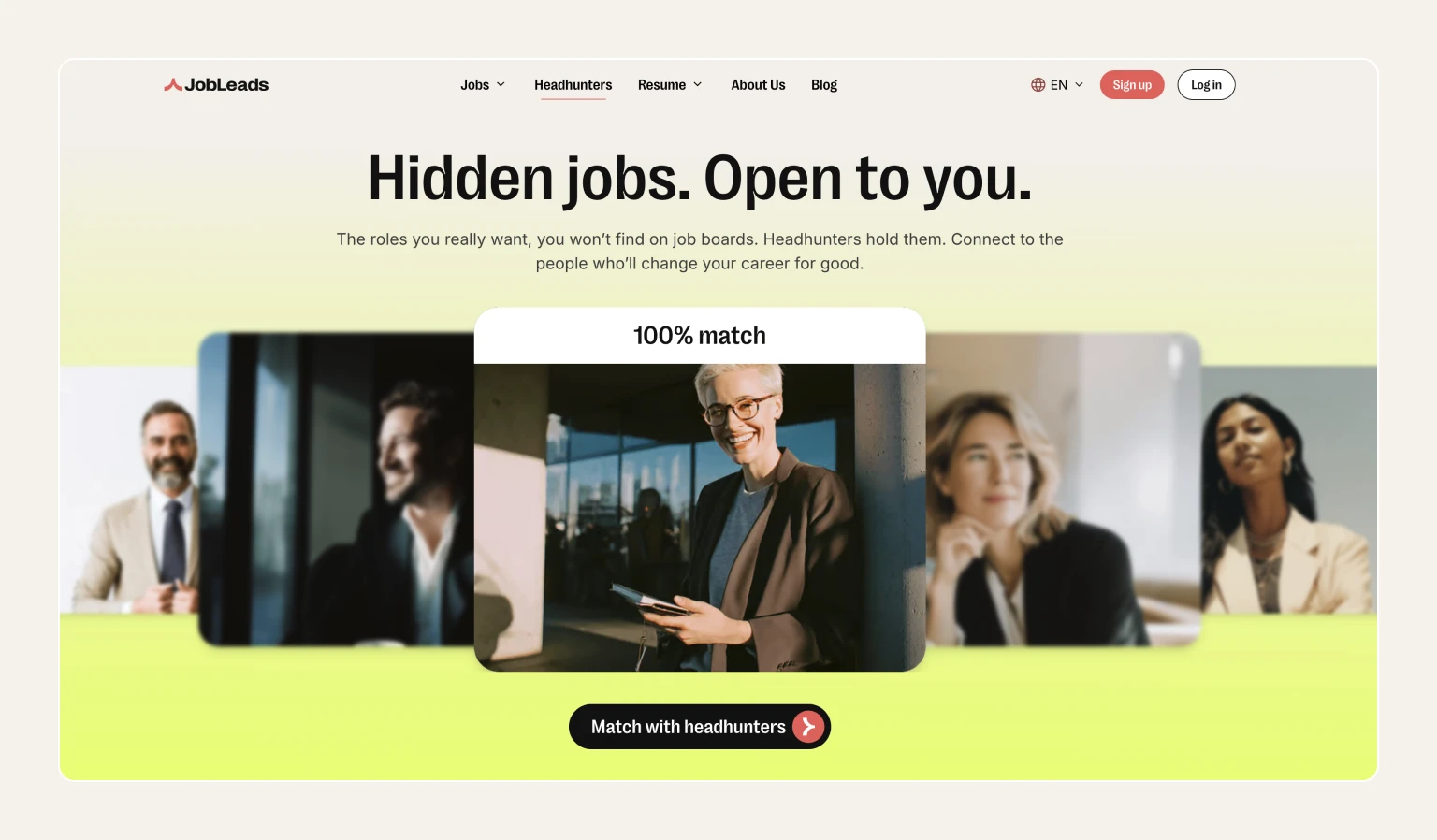
You don't have to wait for a headhunter to find you. JobLeads scans over 400,000 sources every day–from company career pages to headhunter listings–and brings them into one place.
That includes roles that never reach the big job boards, part of the hidden job market most candidates never see. Headhunter-posted roles are simply one input among many, screened the same way as everything else on the platform.
And if you prefer to work the relationship the other way round, JobLeads can help there too. You get matched to headhunters actively hiring for roles like yours, along with their contact details, so you can reach out yourself. There's no on-platform chat, and no resume sent anywhere on your behalf–you stay in control of that outreach.
Whether you're an employer hiring a headhunter for the first time, or a candidate wondering how the money actually moves, the mechanics are simple. Executive search retainers are typically a percentage of the candidate's first-year total compensation, split across the search stages. Think of it as a headhunter service priced for dedicated, exclusive attention, not a database search.
Contingency recruiters for specialist and manager-level roles work differently: they're paid a percentage of first-year salary, only on successful placement. Either way, candidates never pay. Treating any request for payment as anything other than a dealbreaker is one of the job search mistakes that's easy to avoid once you know the rule.
Did you know that…
The US staffing and recruiting industry is projected to reach about $183.1B in 2026, according to Staffing Industry Analysts'. That's the market these fees move through, on both sides of the table.
Maybe a headhunter's call is exactly what gets you thinking about leaving your current job. Maybe you're just curious how to make yourself easier to find. Either way, here's what actually works:
There are really two tracks here. Executive headhunters run retained, employer-paid searches for C-suite and board-level roles. It's a small, high-stakes market dominated by the Big Five and a handful of strong boutiques.
Everyone else is more likely to hear from a contingency recruiter instead. Specialist and manager-level candidates, across nearly every industry, at a firm like Robert Half, Michael Page, or Hays.
Picking the right headhunter company just comes down to matching search type to seniority. And the best headhunter agencies on both lists share the same rule: you should never be the one paying.

Digital PR & Content Marketing Manager at JobLeads
Maryia leads digital PR and outreach at JobLeads. Her work has earned coverage in Fast Company, AOL, Forbes, Fortune, Quartz, and ZDnet—and she specialises in building the systems that make that happen at scale.
Job SearchLearn 10 proven strategies to connect with specialized headhunters using directories, AI tools, networking, and referral programs for targeted job searches.
 Job Search
Get recruiter tips straight from the source. From tailoring your resume to following up after interviews, here’s what hiring managers actually want to see.
 Career Development
Should I quit my job? Here's how to know when it's the right call–from anxiety and burnout to starting a business or going back to school.