
 Career Development
May 19, 2026
Top 30 Big Companies Hiring Remote in 2026
Discover large companies with remote jobs that are worth looking into. Learn which big companies hire remote and which have it engraved in their policy.


Remote work pros and cons shape where millions of people choose to work.
Nearly 4 in 10 job seekers now say that a lack of remote work is a dealbreaker when evaluating new roles. Yet employers keep pulling back. Return-to-office mandates are rising across major industries. And a SHRM-cited survey found that companies implementing these policies are experiencing an abnormally high turnover.
But, what does the data actually show? In this guide, you will have a full breakdown of remote work advantages and disadvantages for both workers and employers.
Here’s the full evaluation of the benefits and challenges for employees:
For many people, the advantages are life-changing. It’s easy to dismiss remote work benefits as lifestyle perks, but the data tells a different story. Workers who have experienced remote work consistently rank flexibility and autonomy above salary increases when evaluating job offers. That’s a fundamental shift in how people value their time rather than just a soft preference.
The benefits also vary by type of worker. Parents gain back hours previously lost to commuting. People with chronic illness or disability gain access to roles that were once physically inaccessible. Early-career professionals in smaller cities suddenly compete for roles at global companies.
Here are the top pros of working remotely, based on what employees consistently report:
Pro-tip
The benefits of working remotely only hold if you have a dedicated workspace. Even a corner of a room with a proper chair and desk makes a measurable difference to focus and wellbeing.
Work-life balance and remote work go hand in hand but only when boundaries are set deliberately.
This is where remote work gets complicated. Flexibility sounds like an unambiguous win, and for many people, it is. No fixed start time. No commute eating into your morning. No need to request half a day off for a dentist appointment. But flexibility is also a trap if you’re not careful about how you use it.
The problem is structural. When your home is your office, the physical boundary between work and rest disappears. There’s no commute to decompress on, no office door to close behind you. So, work can bleed into evenings, weekends, and the hours you used to spend fully off. The truth is that for some workers, remote work doesn’t reduce stress, it just relocates it.
Flexibility is the double-edged sword of working from home. Without structure, remote work becomes an “always on” culture. You’re technically at home, but you never really leave work.
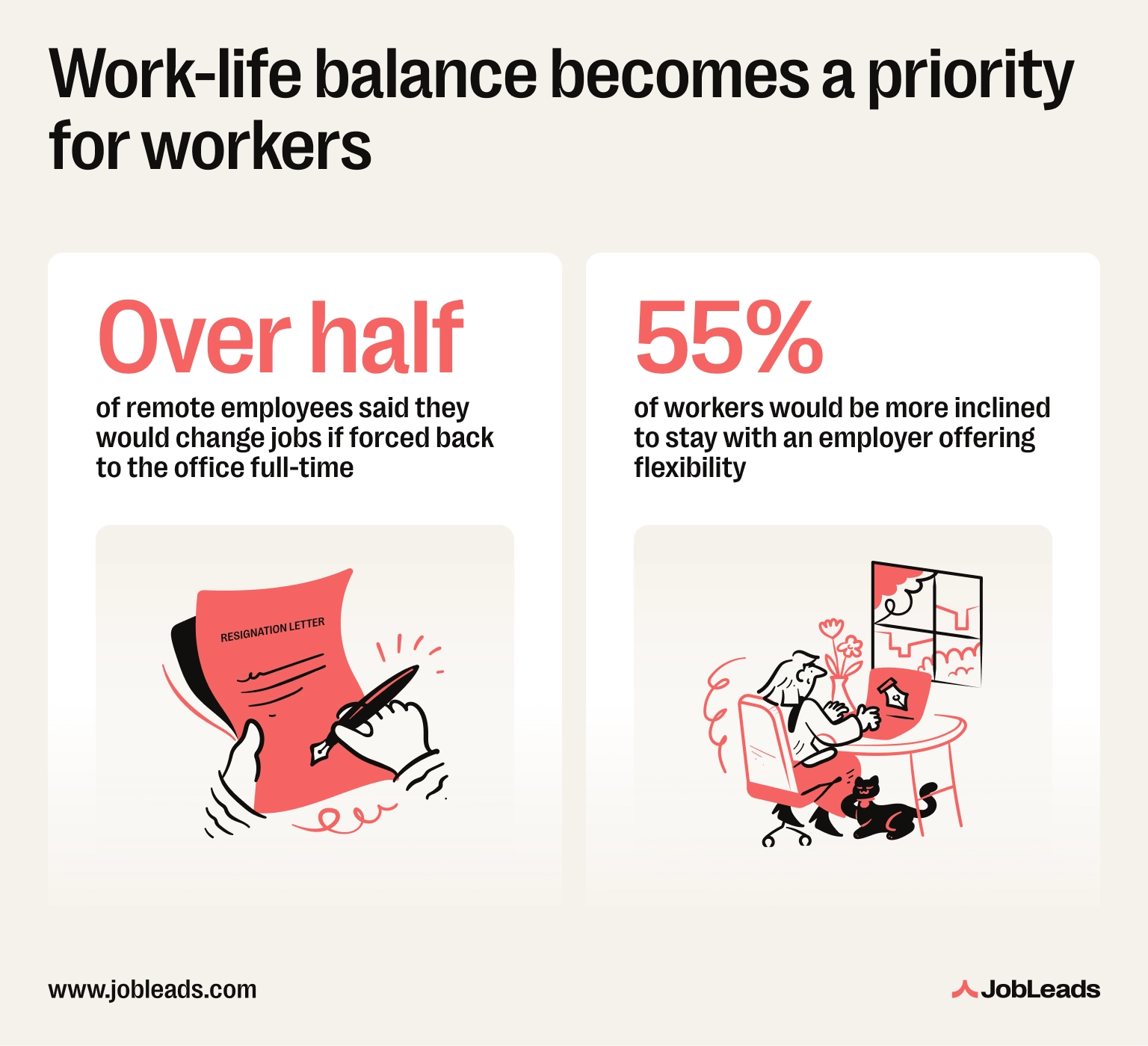
A SHRM-cited survey found that 55% of workers said they would be more inclined to stay with an employer offering flextime or hybrid options. Also, over half of remote employees said they would change jobs if forced back to the office full-time. But you can only enjoy the flexible work schedule when you actively protect your off hours.
One practical fix is to set a firm end time, close the laptop, and treat your finish time as seriously as a meeting you cannot miss.
Read more: If you’re already feeling the pressure of constant availability, our guide to job search burnout covers how to protect your energy during a career transition.
The disadvantages of remote work are just as real as the benefits, and they are often underestimated.
Most coverage of remote work skews positive. Articles talk about freedom, flexibility, and work-life balance. What they gloss over are the structural problems that accumulate quietly over months and years of working from home.
The downsides of remote work are not dramatic or sudden. They creep up as isolation sets in and career visibility erodes. By the time most remote workers notice the cumulative weight of these challenges, they have already shaped their confidence and their career trajectory.
But understanding the cons of working from home before you experience them is important so you can better manage them instead of being caught off-guard.
Here are the downsides of working from home:
Did you know that…
A landmark study by a Stanford economist Nicholas Bloom found that hybrid workers are just as productive as fully in-office colleagues and that hybrid schedules cut resignation rates by 33%.
Isolation is the most cited remote work challenge, and its effects go beyond just feeling lonely.
It starts small. You skip the virtual coffee chat because you have a deadline. You stop sending casual Slack messages because it feels intrusive without context. You eat lunch at your desk because there is nowhere else to go. Slowly, your world at work shrinks to a screen and a to-do list.
This is a natural consequence of removing the ambient social texture of office life that includes the hallway greetings, the coffee chats, the shared frustrations over a broken printer. These micro-interactions seem trivial but they are the connective tissue of workplace relationships. Without them, even high performers can start to feel isolated and less invested in their team.
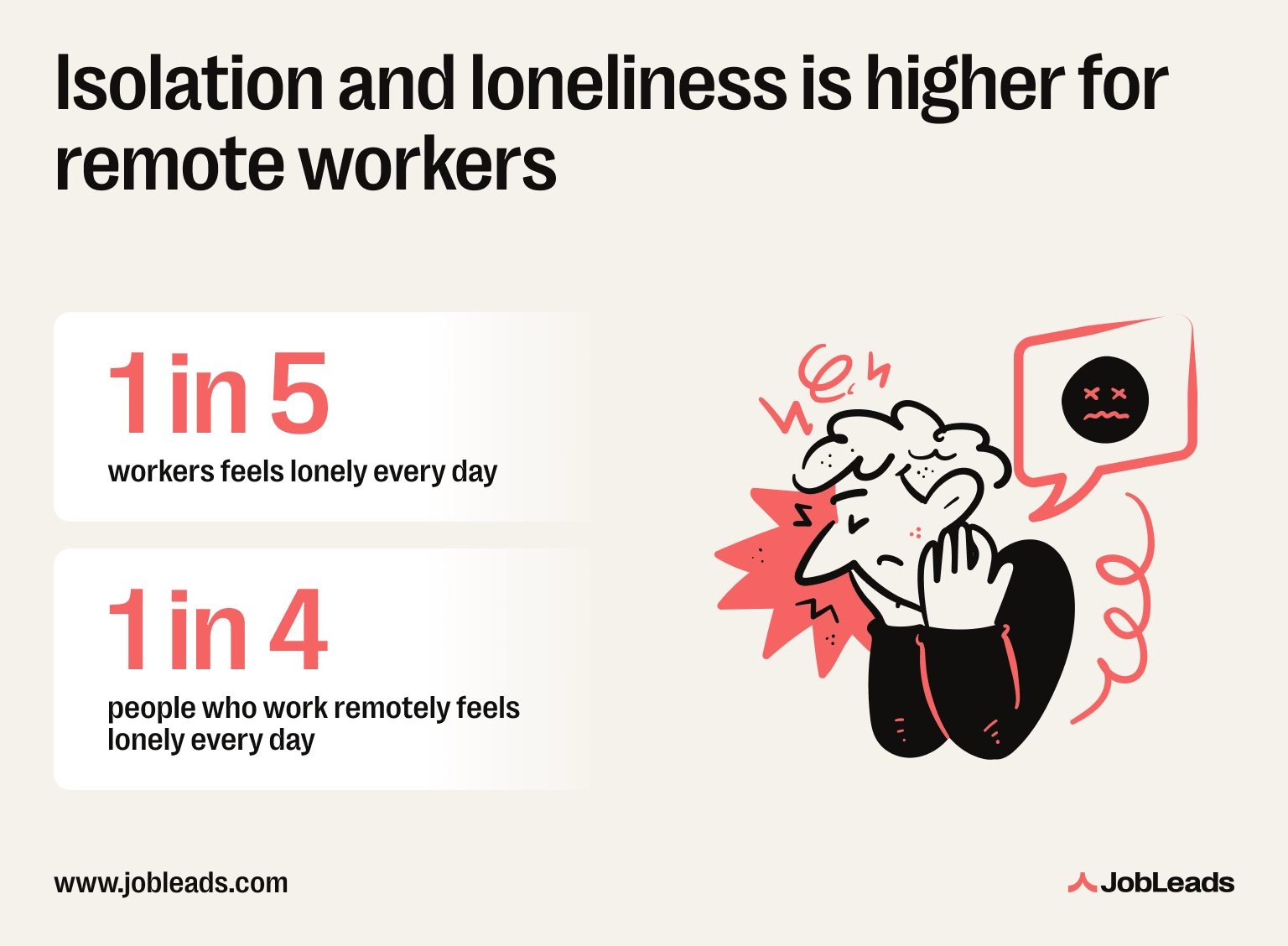
The scale of the problem is significant. Gallup's State of the Global Workplace report found that 1 in 5 workers feels lonely every day, and the figure is higher (25%) for those who work fully remotely. An APA survey found that nearly 7 in 10 US adults said they needed more emotional support in the past year than they received. These are serious remote working issues that deserve direct attention and not just a team Zoom call once a month.
The solution is not necessarily returning to the office, but being deliberate about connection which includes scheduling virtual coffee chats or occasionally working from a co-working space
Challenges of working remotely like isolation are manageable. But they do not disappear on their own and it’s important to be honest with your manager when remote work is affecting your wellbeing.
Read more: Learn how to practice workplace mindfulness to decrease your burnout and work stress.
These rarely get a fair hearing. Most content focuses on the employee experience. But employers carry real risks and rewards from remote work, too.
In the last few years, workers as well as companies have experienced quite a number of interesting shifts. Before 2020, remote work was an outlier, then the pandemic shifted this and everyone who could do it, was asked to work from home. Now, a growing number of companies are pulling back, citing culture erosion, collaboration challenges, and management complexity.
None of those concerns are unfounded. But neither is the business case for remote work. The strongest employers are deliberate about which functions benefit most from each arrangement and build policy around that reality rather than just instinct.
The business case for remote work is quite strong. Significant cost savings are the most visible benefit. But the deeper advantages show up in talent strategy including who you can hire, whether they stay, and how consistently they perform.
Employers who have built remote work into their operating model tend to see compounding returns across these areas:
Read more: Check out the highest paying cities in the world and where your income will go furthest.
The challenges of remote work for employers are structural, and they tend to surface long after the initial remote transition feels like a success. The problems include potential culture erosion and security gaps widening as headcount grows.
Moreover, managers promoted for their in-person instincts find themselves operating without the signals they relied on. Instead of “management by observation”, they need to change their tactics to “management by output.” That’s because the coffee small talk is removed and managers need to rely on assessing the presented output, more than the presence in the room.
Employers can solve these issues, but they first have to stop dismissing them as minor friction. Here are the main ones to consider:
Pro-tip
Employers who formalise remote work policies with clear expectations on availability, communication norms, and performance metrics experience far fewer of these disadvantages. The same applies to the administrative side: payroll software handles tax withholding, filings, and deposit schedules automatically, which takes much of the compliance burden off managers running distributed teams. Remote work isn’t inherently good or bad. It hinges on how deliberately the setup is managed and reflects the quality of the system around it.
Which is actually better: remote or office? The honest answer is that it depends on the role and the team.
The remote vs. office debate tends to produce more heat than light. Advocates of in-office work point to collaboration and culture growth. Whereas remote work defenders point to cost savings and productivity research. Both sides have real data behind them and both sides tend to cherry-pick it.
The more useful question is not which model is better in the abstract, but which is better for a specific role at a specific career stage, in a specific team and organisation. A junior software engineer three months into their first job has different needs from a senior content strategist with a decade of experience and a quiet home office.
Work from home advantages and disadvantages also shift over time. What suits you at 25 may not suit you at 35. Treating this as a permanent decision rather than a current-best-fit decision is where most people go wrong.
Here is a direct side-by-side comparison of what each model actually delivers:
| Aspect | Remote work | Office work |
|---|---|---|
| Commute | None | Daily time and cost |
| Flexibility | High–choose hours and environment | Low–fixed schedule and location |
| Collaboration | Harder, requires async tools | Easy, spontaneous |
| Social connection | Low by default, requires active effort | High by default |
| Career visibility | Lower–out of sight, out of mind risk | Higher–proximity to leadership |
| Personal costs | Lower–no commute, lunches, or work wardrobe | Higher |
| Employer overhead | Lower real estate and facilities | Higher |
| Focus | Can be higher with a proper setup | Varies–open plans often disrupt focus |
| Culture | Harder to build and maintain | Easier to develop organically |
| Talent pool | Global–hire anyone, anywhere | Local–limited to commuting distance |
Read more: Not sure which work environment suits you? Our guide to culture fit can help you identify the setup where you actually do your best work.
Most discussions of remote work focus on the individual. But remote work at scale is a team challenge, and the dynamics change significantly when you move from one remote worker to an entirely distributed team.
A virtual team is any group that works together primarily through digital tools rather than shared physical space. That includes fully remote teams, but also hybrid teams spread across multiple locations or time zones.
Managing a virtual team requires a genuinely different skill set from managing an in-office team. The signals you rely on in person like body language and the energy in a room are not available to you online. You have to build trust and maintain morale across text or video.
Here is what the research and experience show about pros and cons of virtual teams:
| Advantages | Challenges |
|---|---|
| Global diversity: different backgrounds and perspectives improve decision-making in ways homogeneous local teams often cannot | Miscommunication risk: Harvard DCE research identifies communication breakdown as the primary failure point for virtual teams |
| Async flexibility: team members across time zones can work when they are sharpest protecting their deep work | Slower trust-building: fewer in-person moments mean fewer natural opportunities for positive interactions |
| Stronger documentation habits: distributed teams write things down which creates institutional knowledge that survives turnover and restructuring | Time zone friction: getting a team from London, Austin, and Singapore into the same live meeting window is a logistics puzzle with no clean solution |
| Leaner meeting culture: virtual teams often become more efficient communicators out of necessity, cutting the meeting overhead that drains in-office teams | Collaboration lag: reviews, approvals, and decisions take longer when you cannot simply walk over to someone's desk |
| Loneliness at scale: Gallup's data found that fully remote workers report the highest loneliness rates |
The teams that thrive in a remote working environment are those that invest heavily in clarity from the start. This includes clear roles, clear processes, and clear communication norms. According to Harvard DCE's research on virtual team management, teams that skip this foundation tend to pay for it later in avoidable conflict and missed deadlines.
Read more: Learn how to ace your next virtual interview with these remote interview tips.
Remote work is not inherently better or worse than office work. It depends almost entirely on how the arrangement is designed by the employer and by the individual.
For employees, the biggest wins are time, money, and autonomy. The biggest risks are isolation and career visibility. Both are manageable with the right habits.
For employers, the gains are real estate savings and access to a global talent pool. The challenges are culture and management complexity. Both are solvable with deliberate policy.
The question is not “is remote work better?” The right question is: is remote the right arrangement for this role, at this stage of your career?
As async tools keep improving, the practical disadvantages shrink. But the human need for connection does not. The best remote setups account for both.
Looking for remote roles that actually match how you work? JobLeads pairs job seekers with positions based on individual preferences for location, salary, and more.

Content & Insight Writer
Beata creates content that puts job seekers first. From practical blog advice to first-hand research studies, her writing is designed to give people the clarity and confidence to find the role they deserve.
Career DevelopmentDiscover large companies with remote jobs that are worth looking into. Learn which big companies hire remote and which have it engraved in their policy.
 Job Search
Discover effective job search strategies and learn how the hiring process works. Debunk myths and follow the steps that actually secure your dream position.
 Job Market Trends
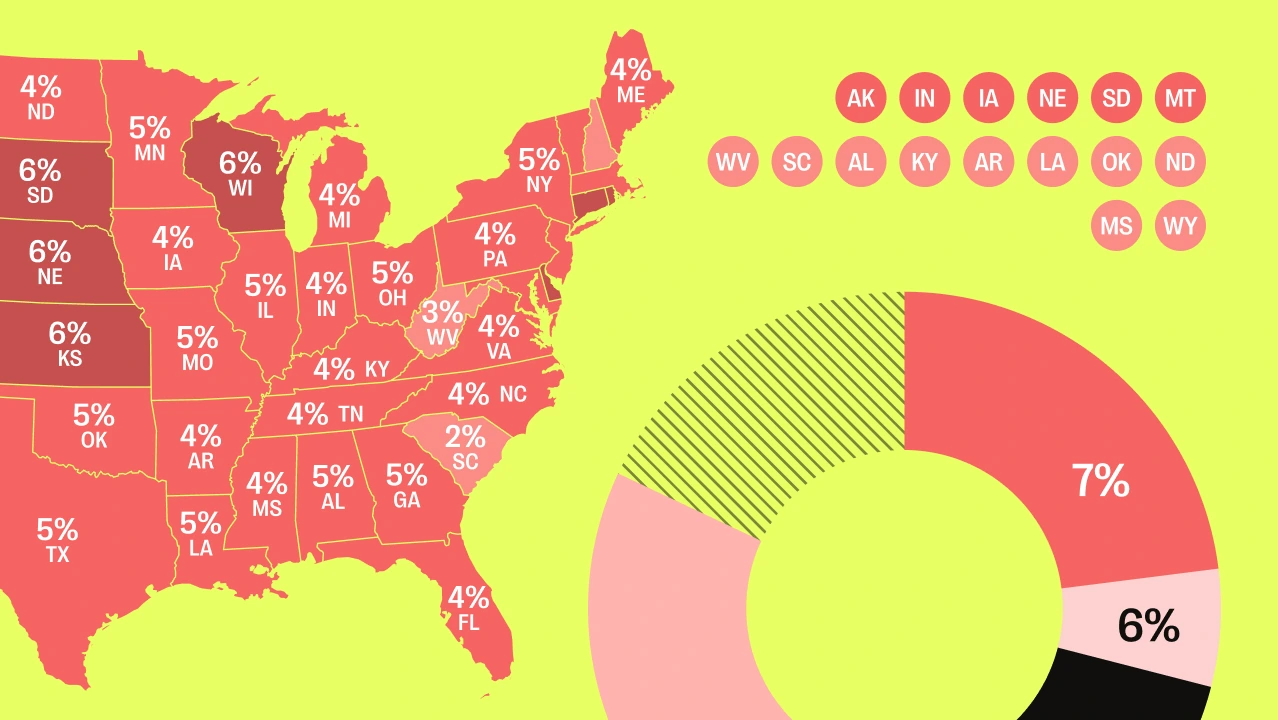
Understand the state of remote work in the US in 2026 with JobLeads data on hiring demand, industry trends, regional patterns, and worker preferences.