
 Job Search
April 22, 2024
8 Top Freelance Websites to Kick-Start Your Solo Career
Discover 8 top freelance websites that offer diverse opportunities to kick-start your solo career. Find the best platforms for flexible, high-earning freelance work.


Remote work is one of the most sought-after job perks out there. But, finding it is harder than most people expect. According to a JobLeads survey, over 74% of job seekers would choose a remote role over a higher salary at an in-office job.
The demand is overwhelming. The supply is not.
A JobLeads analysis of 5 million US job postings found that only 6% of open roles are fully remote. That gap means competition is fierce and the job boards for remote work you rely on can make or break your search.
This guide covers the best remote job boards including free and paid options.
Here’s a comparison table for a quick look at the best remote work job boards:
| Platform | Best for | Trustpilot rating | Free plan | Pricing starts at |
|---|---|---|---|---|
| JobLeads | Curated job openings for experienced professionals | 4.5/5 ⭐ | Free trial | Premium at $2.99 for 14 days |
| FlexJobs | Scam-free vetted listings | 4.1/5 ⭐ | No | Starts at $9.95/mo |
| We Work Remotely | Tech, design, marketing | 3.5/5 ⭐ | Yes | Free |
| Remote.co | Curated remote-first companies | 4.2/5 ⭐ | Yes | Free |
| RemoteJobs.io | High-volume browsing | 4/5 ⭐ | Yes | Free |
| NoDesk | Minimalist free board | 2.9/5 ⭐ | Yes | Free |
| Working Nomads | Digital nomad & location-independent roles | 3.4/5 ⭐ | Yes | Free |
| Dual-use: search with recruiter inbound | 1.2/5 ⭐ | Yes (basic) | Premium at $39.99/mo | |
| SkipTheDrive | Work-from-home roles, non-tech | 3.6/5 ⭐ | Yes | Free |
Now–let’s go into more details.
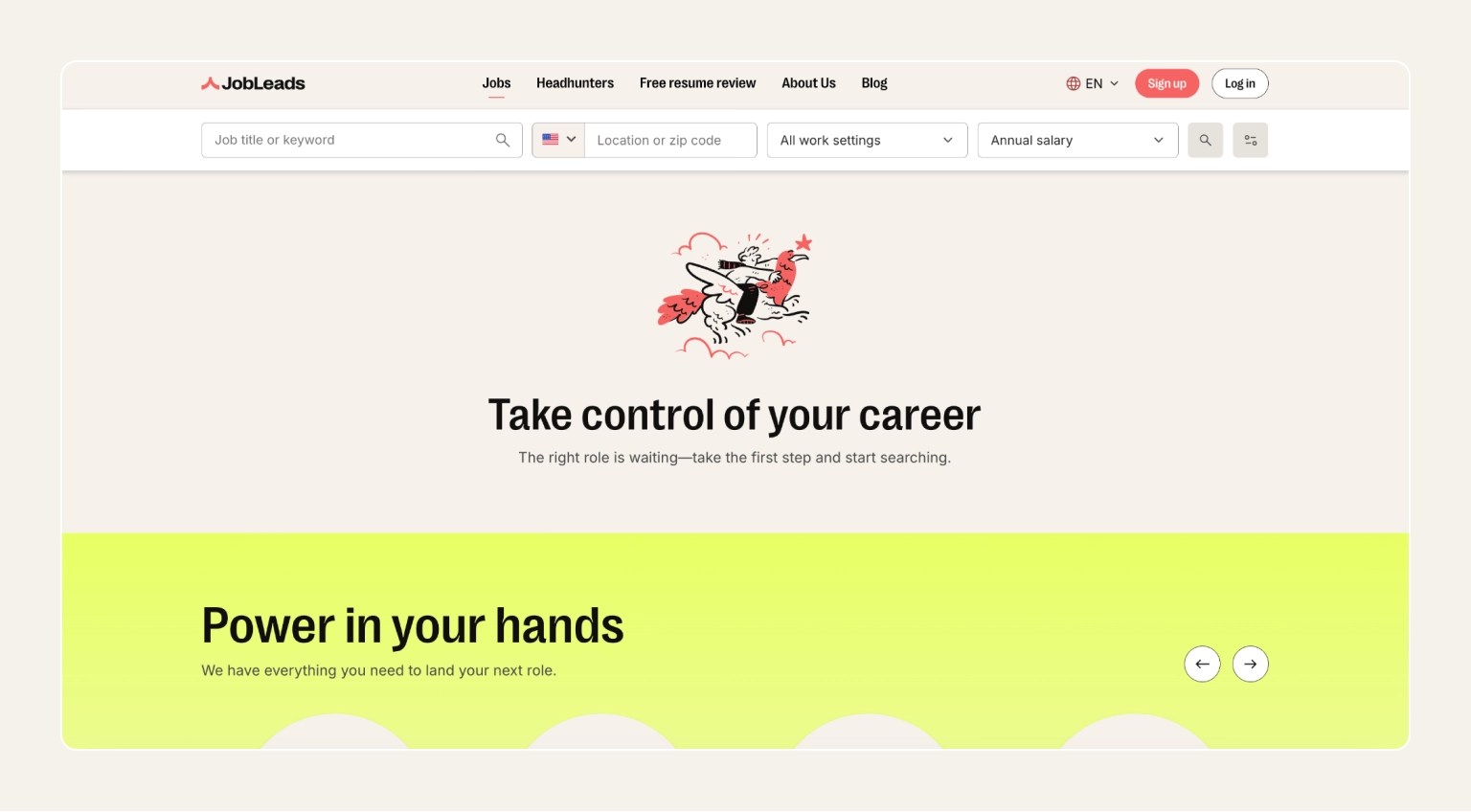
We know this is our tool but we’re not here to toot our own horn. We’ll be as unbiased as possible and if you want to double check, feel free to read through our users’ reviews.
JobLeads is a career platform built in 2007 for professionals, not employers. Every feature serves one purpose: helping you find the right role faster. This means no noise from employer-sponsored rankings and no inflated listing counts full of jobs you've already seen on three other sites.
Most remote job search tools make you do the heavy lifting. JobLeads reverses that. It pulls remote listings from over 400K sources including job boards, company career pages, and niche sites. Then, the platform removes duplicates automatically and surfaces the best matches for your profile. If the same role is posted on five boards, you see it once. The result is a cleaner, faster search with less manual filtering.
Main features:
Pricing:
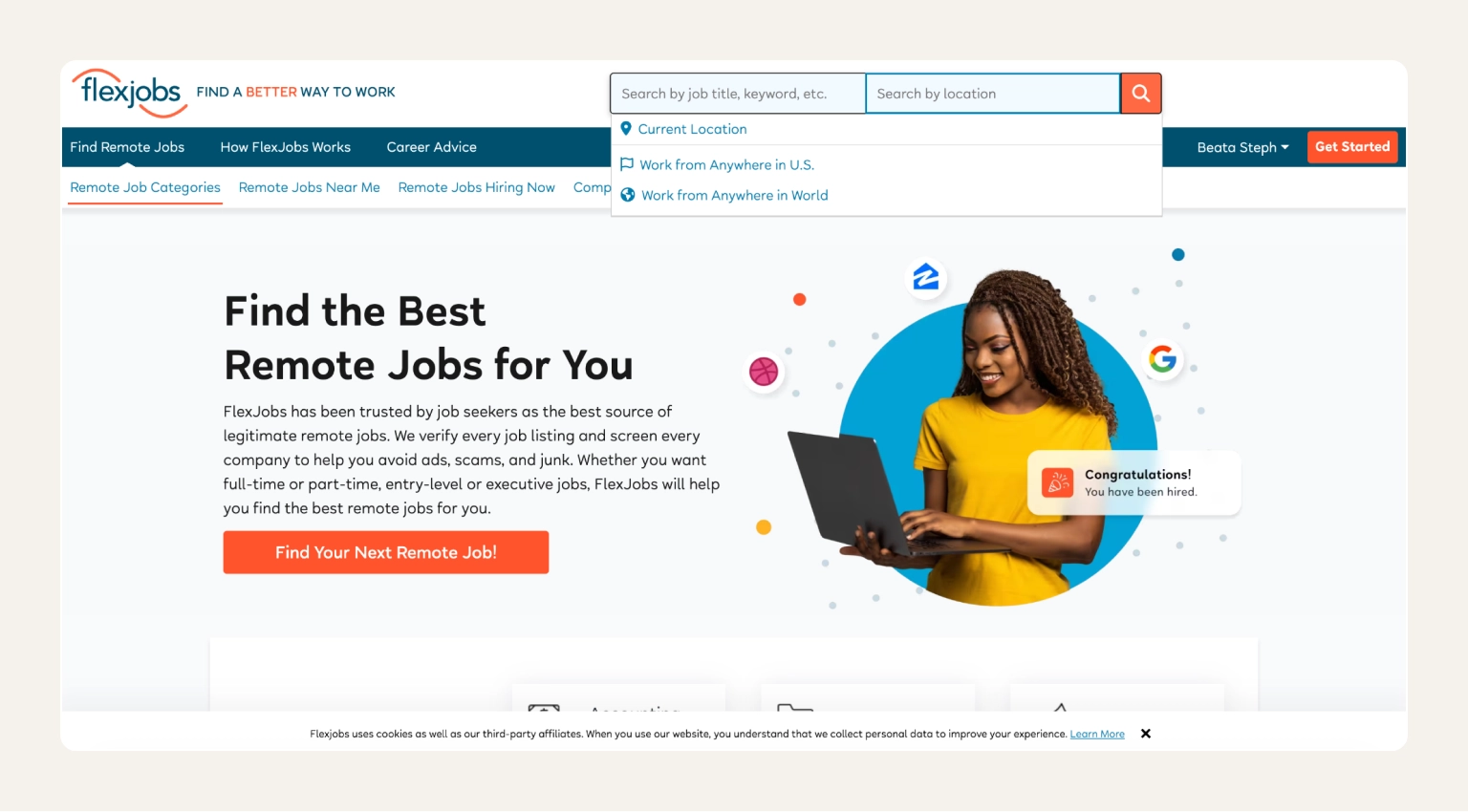
FlexJobs is a remote job board where every listing is reviewed by a real person before it goes live. That means no scams or unpaid internships buried in the results.
The platform has been running since 2007 and covers many job categories, from writing and customer service to software engineering and finance. It focuses on fully remote positions but also includes hybrid and flexible-schedule roles. If you want to be sure that every opportunity you see is legitimate, FlexJobs removes the guesswork.
Pros:
Cons:
Pricing:
Did you know that…
According to the FTC's Consumer Sentinel Network, Americans lost $491 million to job scams in 2023. Also, fake remote job listings are one of the most common fraud schemes.
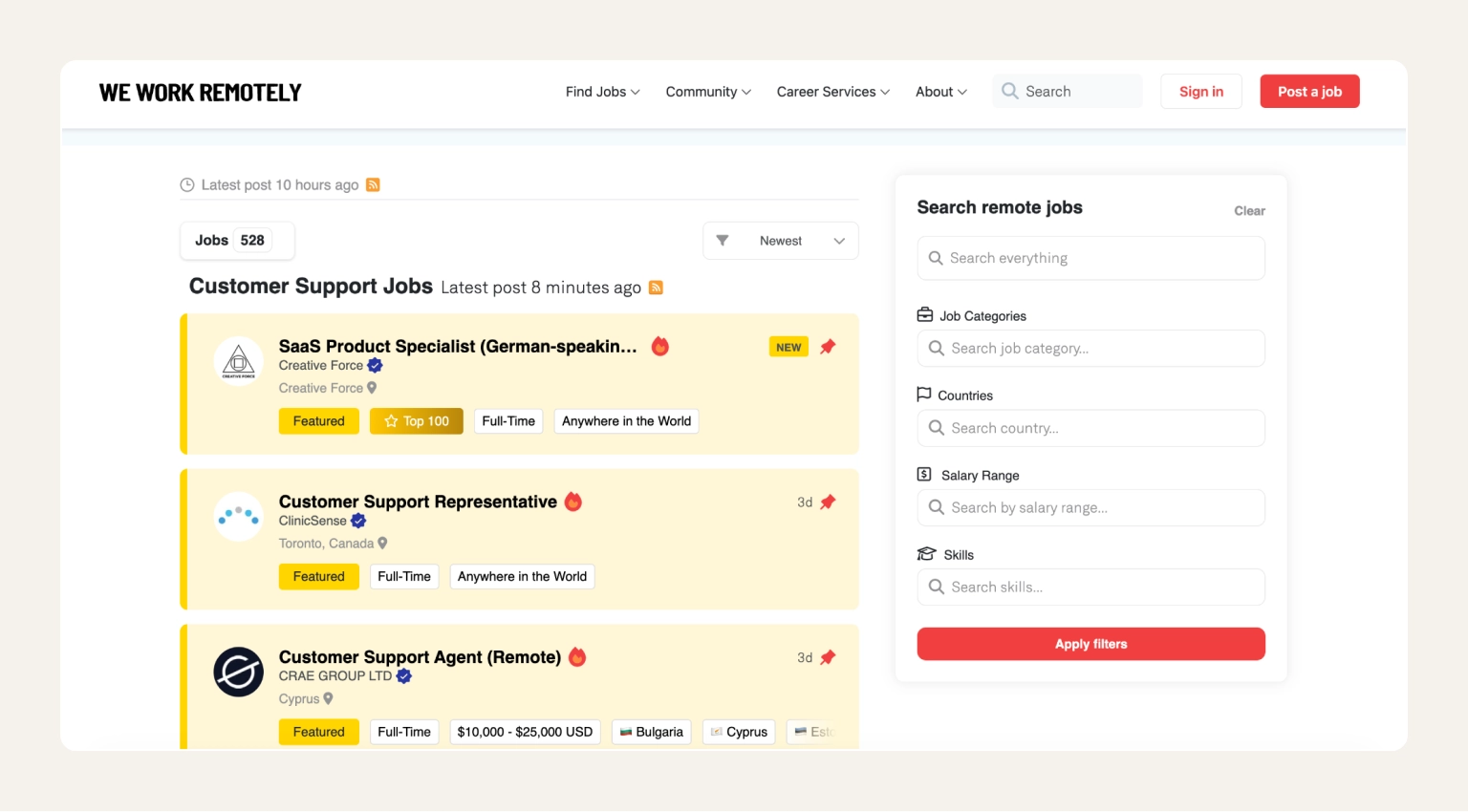
We Work Remotely is one of the oldest and largest dedicated remote job boards on the web. It was founded by the team behind Basecamp and now draws over 4.5 million monthly visitors. The listings lean heavily toward tech–like programming, DevOps, data roles–but also cover marketing, customer support, and management roles.
Good news for job seekers: it’s completely free for you. Moreover, you don’t even need an account to browse. Companies take the bill, paying between $299 and $599 per listing, which filters naturally for employers who are serious about remote hiring. That said, listings aren’t manually screened for fraud, so some employer due diligence still falls on you.
Pros:
Cons:
Pricing:
Read more: Check which big companies hire remotely.
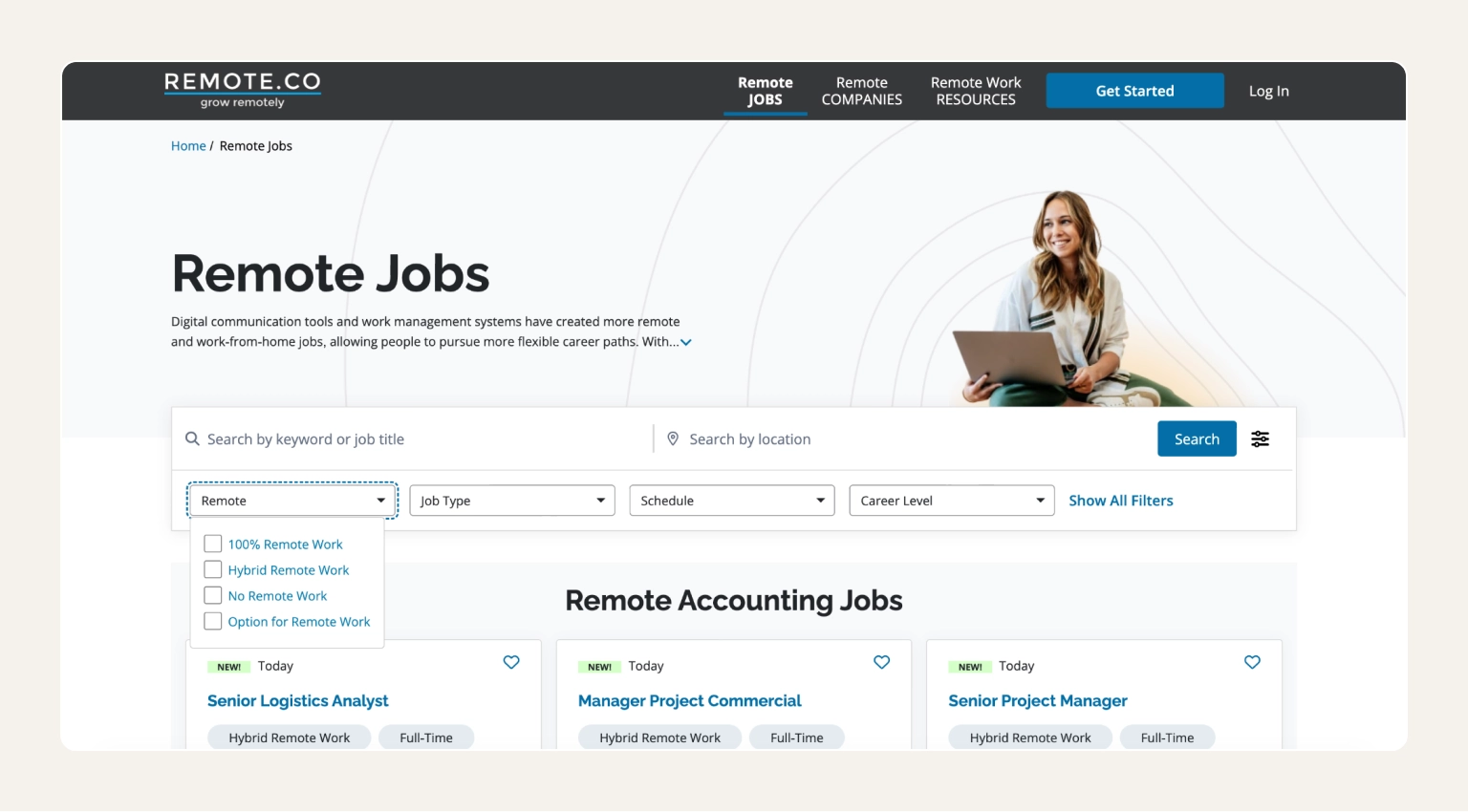
Remote.co is a curated remote job board focused on companies that are genuinely remote-first. This means they’re not just open to remote, but they’re built around it. It’s a sister site to FlexJobs (both are owned by FlexJobs Media), but unlike FlexJobs, it’s free to browse. Listings are editorially selected rather than algorithmically pulled, which means lower volume but a better signal-to-noise ratio.
Beyond job listings, Remote.co features interviews with remote-first companies and Q&As about remote work culture. That context helps you understand how a company actually operates, and how serious they take remote work, before you apply.
Pros:
Cons:
Pricing:
Read more: Learn what a culture fit is and why it matters in your job search.
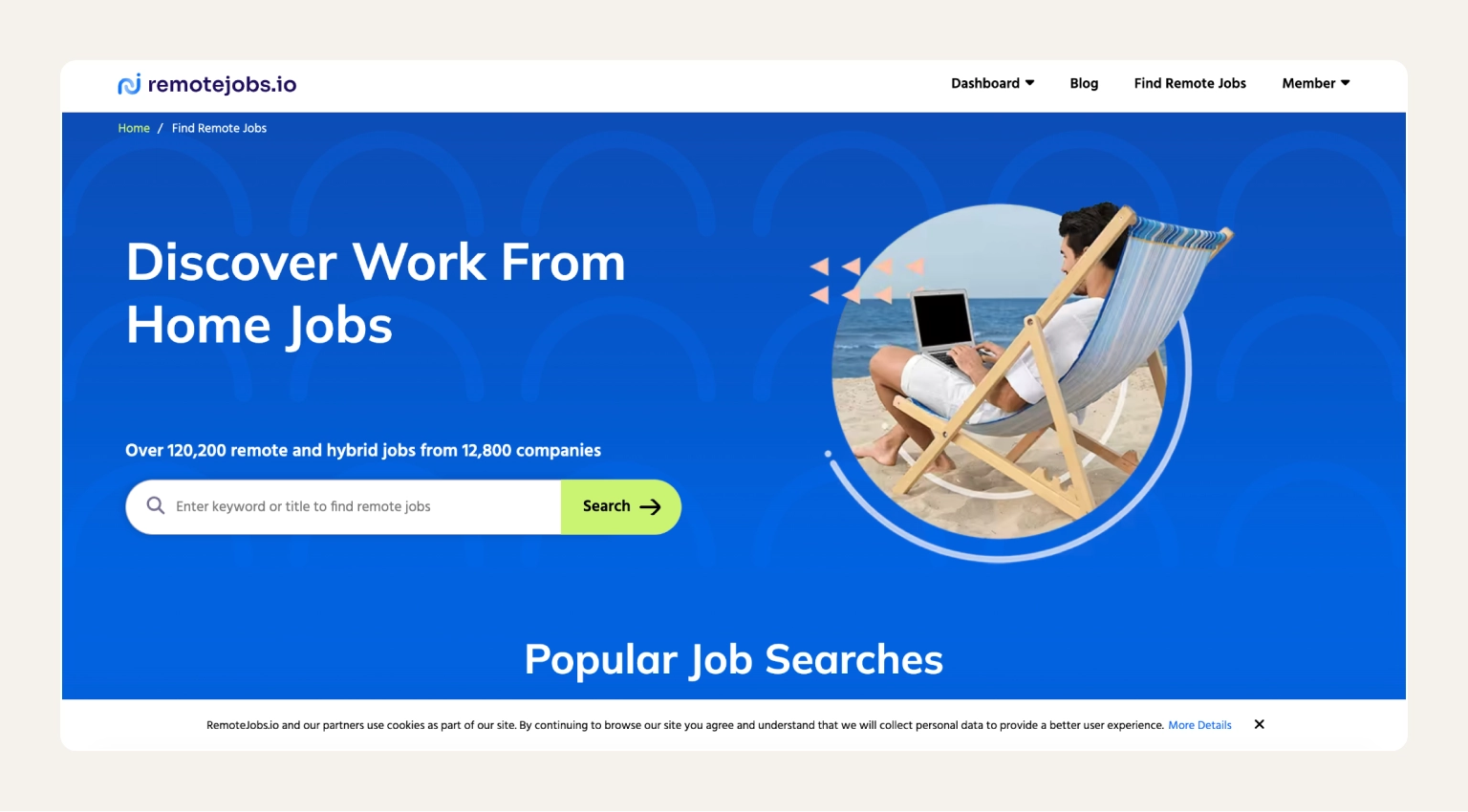
RemoteJobs.io is a remote job aggregator that pulls listings from across the web into a single, filterable feed. If volume is your priority and budget is zero, this is one of the broadest free options out there. The platform lets you filter by category, experience level, and job type, as well as set up email alerts for new listings.
The trade-off is curation. RemoteJobs.io casts a wide net, which means duplicate posts appear, and listing quality can vary. It works best as a discovery tool for a way to spot new openings, instead of your primary job management hub.
Pros:
Cons:
Pricing:
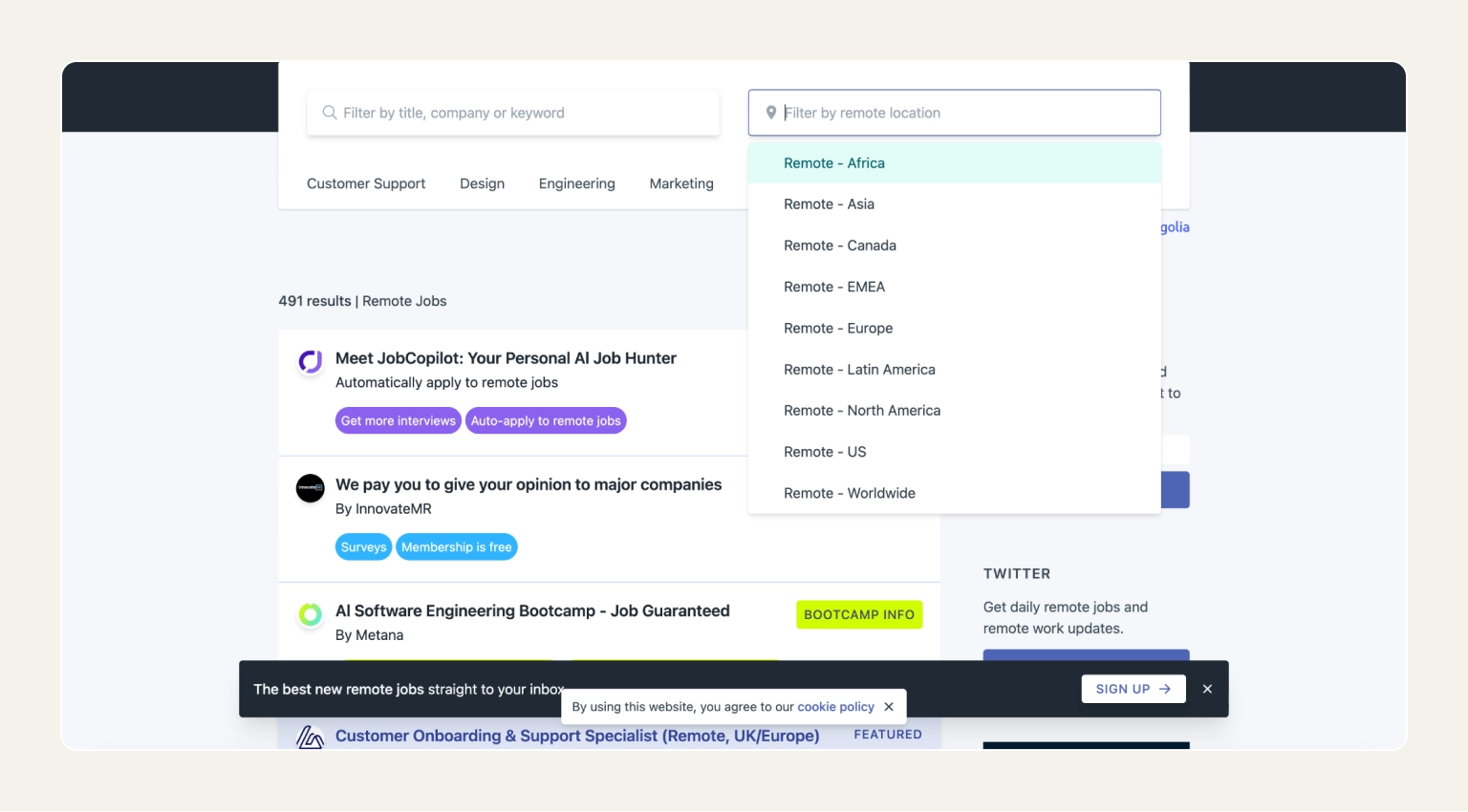
NoDesk is a no-frills remote job board for people who find most job sites overwhelming. The interface is deliberately simple. It offers a clean list of roles, filtered by category, with no ads and no popups. It also includes a directory of remote-friendly companies and a Job Copilot that automates applying to remote positions.
The listing volume is modest, but the curation is solid. NoDesk tends to pull from company career pages and reputable boards rather than scraping indiscriminately. It’s a strong option for developers and designers who want a quiet, focused browsing experience.
Pros:
Cons:
Pricing:
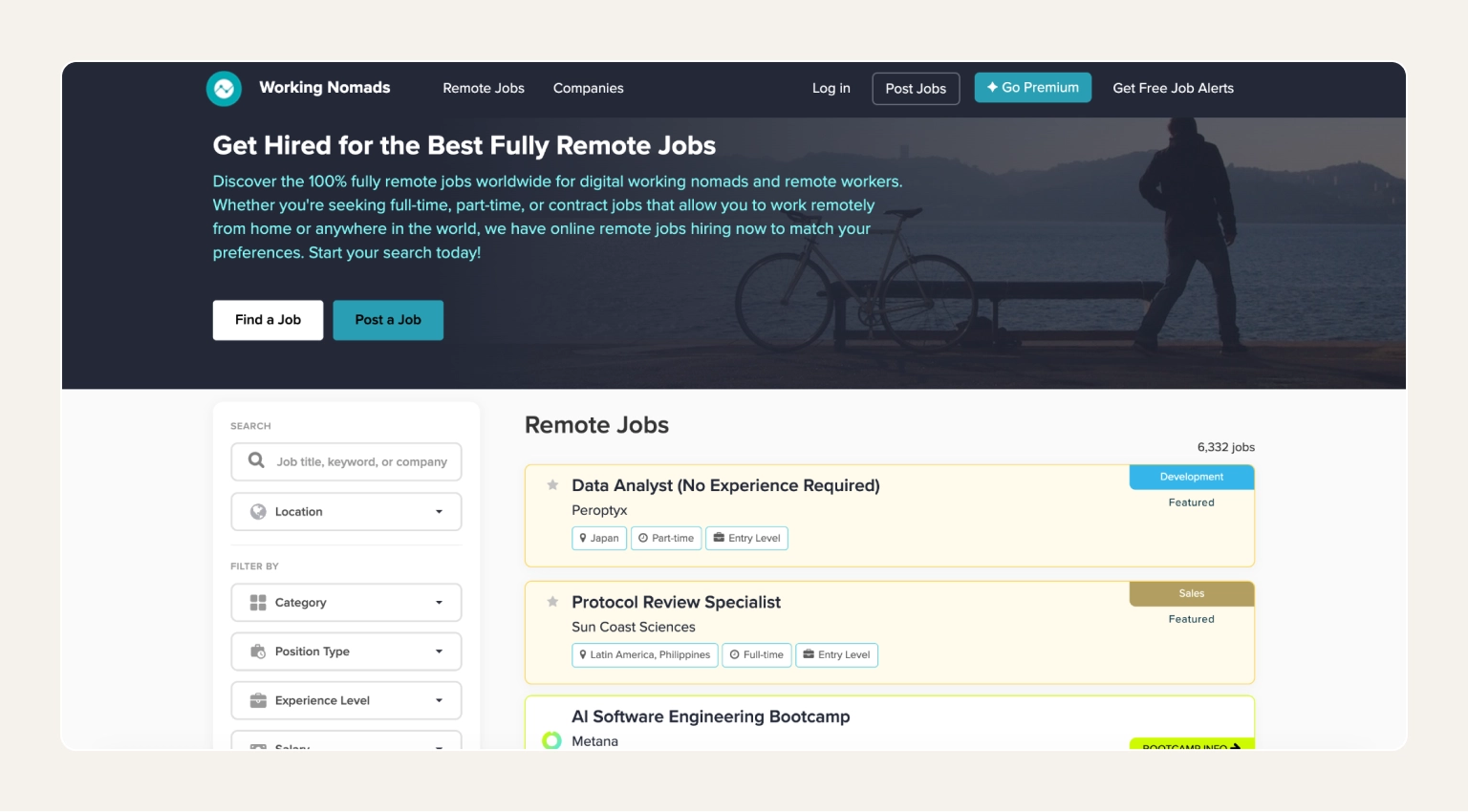
Working Nomads is a curated remote job board for people who want real location independence, and not just remote-friendly roles that quietly require you to be in a specific timezone or country. The team curates listings manually, which filters out positions listed as remote but are actually hybrid or geo-restricted without saying so upfront.
You can browse for free or subscribe to daily or weekly email digests. Paid email tiers let you narrow alerts to specific categories, which keeps your inbox clean when you’re running an active search. For fully location-independent workers and digital nomads, this level of curation saves meaningful time.
Pros:
Cons:
Pricing:
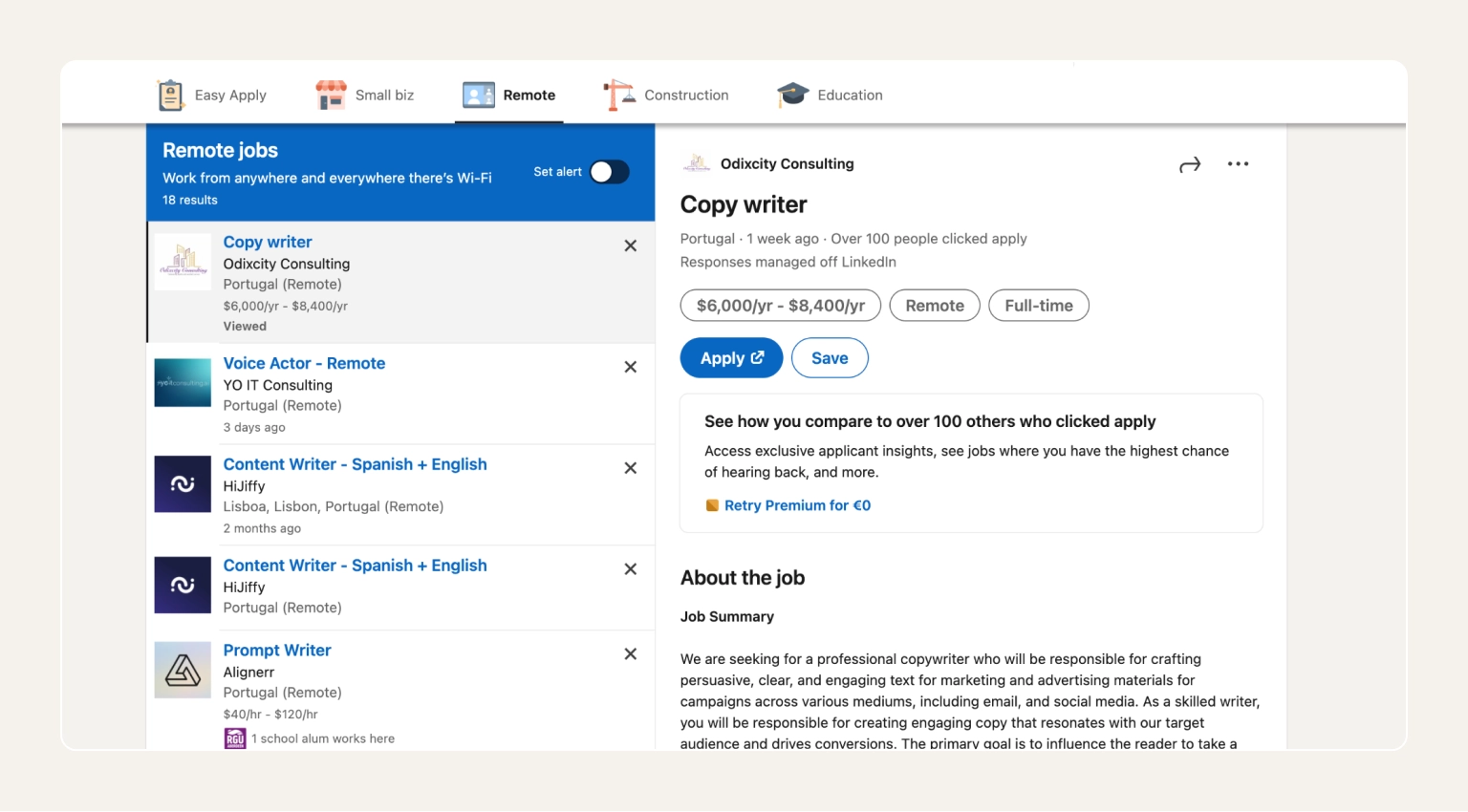
LinkedIn is the only platform on this list that works in both directions. You can search for remote jobs using the remote filter, and recruiters can find you while you do it. That dual-use dynamic makes it uniquely powerful for professionals open to inbound opportunities while actively searching.
The “Easy Apply” feature reduces friction on individual applications. The “Open to Work” badge signals availability to recruiters without exposing it to your current employer (if you choose). The trade-off is noise–LinkedIn's remote label is applied by employers themselves and isn’t always accurate. Some roles listed as remote turn out to be hybrid or region-locked. LinkedIn Premium unlocks InMail, applicant insights, and increased profile visibility for recruiters.
Pros:
Cons:
Pricing:
Did you know that…
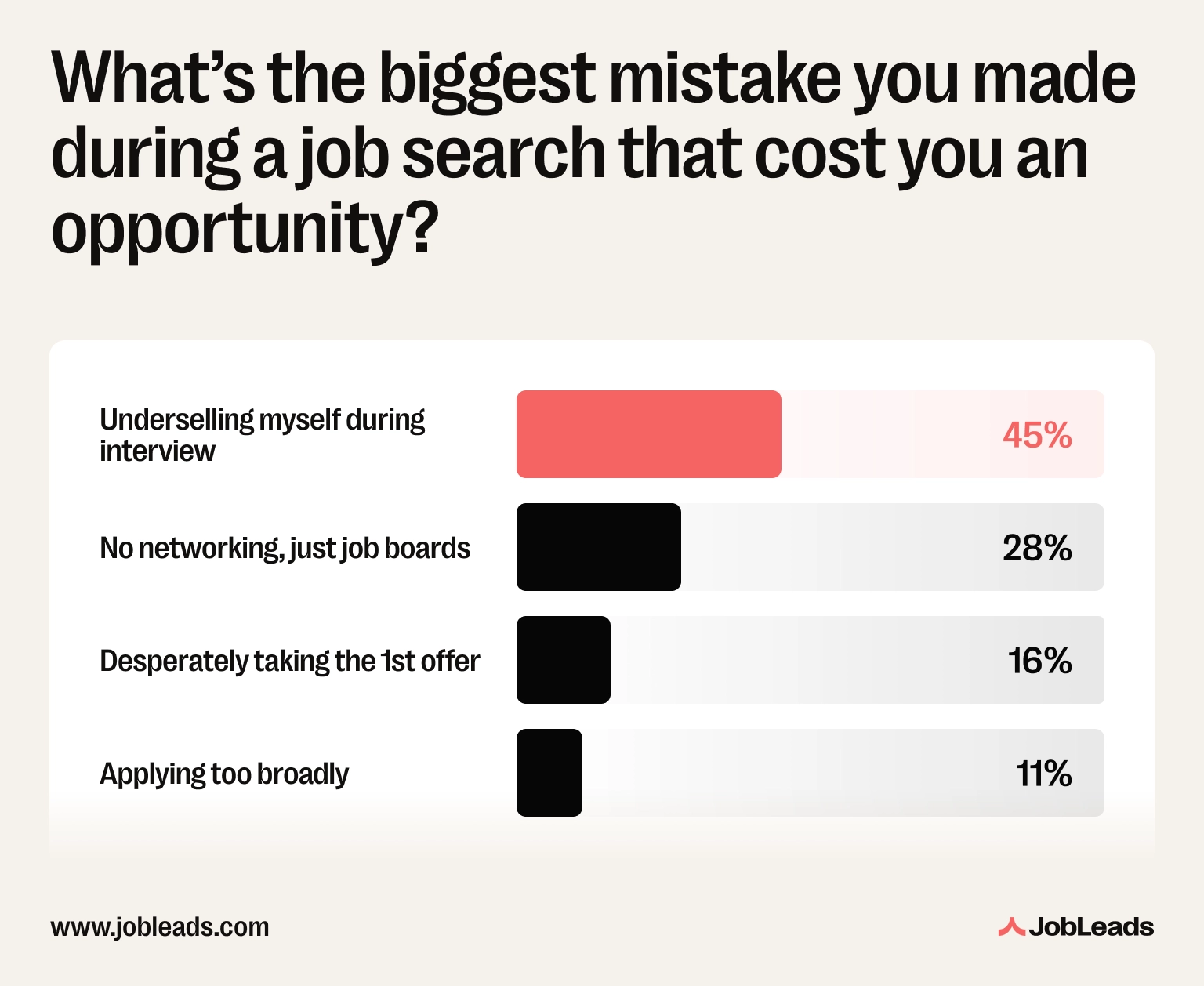
JobLeads survey found that 28% of workers say their biggest job search mistake was relying on job boards with no networking. LinkedIn is the one board on this list where search and networking happen in the same place.
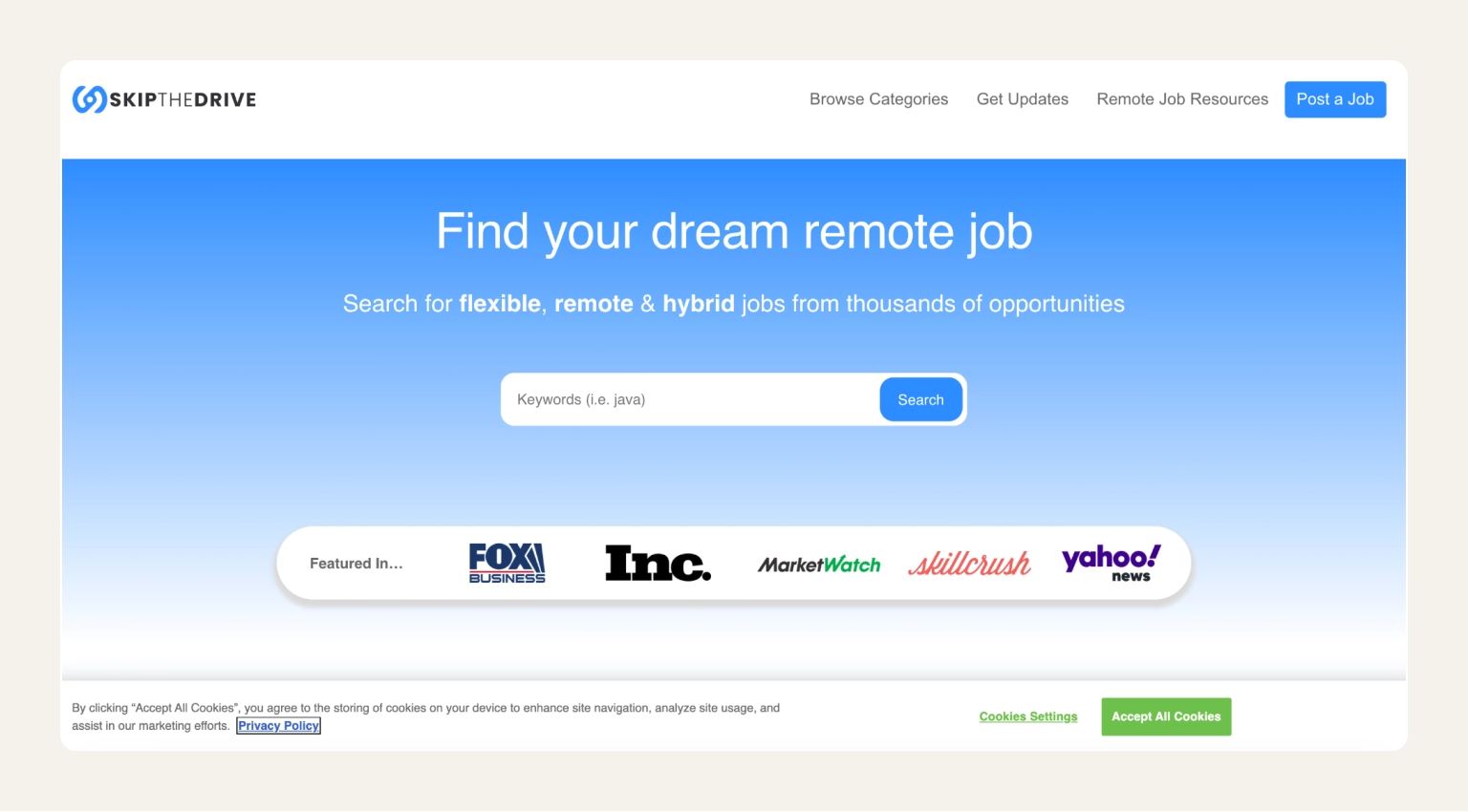
SkipTheDrive is a work-from-home website built for people who want to skip the commute. It’s not targeting those who want the digital nomad lifestyle. Rather, it’s aimed at people who require the ability to work from home. It focuses on traditional employment categories, like customer service, data entry, writing, admin, education, and healthcare. If you aren’t in tech but want a remote position, SkipTheDrive often surfaces roles that tech-heavy boards miss entirely.
This remote jobs board works best as a complementary tool. It aggregates listings from other sources rather than hosting original postings, so some duplication can appear. It works best as a complementary board alongside a primary platform like JobLeads, particularly useful for professionals in service, support, and education fields.
Pros:
Cons:
Pricing:
The best sites for remote jobs depend on your role level, industry, and how much noise you can tolerate. Here's how to pick the best sites to find remote jobs for your situation:
| Your situation | Best choice |
|---|---|
| You want every listing vetted (no scams) | FlexJobs or JobLeads |
| You are in tech or design, budget is zero | We Work Remotely or NoDesk |
| You want to network and create personal branding | |
| You want volume + smart filtering in one place | JobLeads |
| You need genuine location-independent roles | Working Nomads |
| You are in a non-tech field | SkipTheDrive or FlexJobs |
| You want to understand a company's remote culture | Remote.co |
✅ Right: Use two or three boards at once. Ideally, one aggregator for volume, one curated board for quality, and LinkedIn for inbound visibility.
❌ Wrong: Avoid signing up for every platform at once and spending more time managing tabs than actually applying.
The best job boards for remote work balance volume with quality. Paid remote job sites can absolutely earn their subscription fee–but only if what you get back justifies what you put in.
Paid boards typically vet their listings, strip out duplicates, and pull from sources that never make it onto free aggregators. That means fewer reposts of the same job and a higher chance that the role you apply to is actually open.
In a JobLeads poll, about 79% of job seekers said they have applied to jobs they suspected were never real openings, and 58% said it had happened multiple times. Ghost listings are unfortunately the norm on unvetted boards and filtering them out is exactly the job a paid platform should be doing for you.
The remote job market is not broken, but most job boards are not built to help you win it. They show you volume. They show you the same listings everyone else sees. It means that filtering and scam-spotting become your jobs.
Good news is that some job boards are on your side, helping you find your next big opportunity. Paid boards are worth it when they give you vetted listings as well as smart filtering and tools to optimize your search. If the subscription only buys you the same recycled listings you would find for free, skip it.
If you're looking for the best websites for remote jobs that do the heavy lifting for you, start with JobLeads. It pulls from over 400K sources, removes the noise, and puts the right roles in front of you. This way, you can spend less time searching and more time applying.

Content & Insight Writer
Beata creates content that puts job seekers first. From practical blog advice to first-hand research studies, her writing is designed to give people the clarity and confidence to find the role they deserve.
Job SearchDiscover 8 top freelance websites that offer diverse opportunities to kick-start your solo career. Find the best platforms for flexible, high-earning freelance work.
 Job Search
Get recruiter tips straight from the source. From tailoring your resume to following up after interviews, here’s what hiring managers actually want to see.
 Job Market Trends
Our survey of 43,000+ job seekers reveals why most never access the hidden job market, and the strategies that actually work to change that.