
 Job Search
June 10, 2026
Ghost Jobs: What They Are, Why They Exist & How to Spot One
Learn what ghost jobs are and why companies post fake job postings. Check out how to spot a ghost job in seconds, and the best job sites to avoid them.


You did everything right. You prepped, you performed, you sent the thank-you note. They said you'd hear back "by the end of the week."
That was two weeks ago and your inbox is a ghost town.
Getting ghosted after an interview is one of the most disorienting moments in a job search. It's even worse after the final round.
Here's why that could have happened: most companies take longer to respond than initially anticipated so the silence could mean internal delays.
Unfortunately, not always.
Being ghosted after an interview means an employer stops all communication after you've interviewed. No rejection, no update, no reply to your follow-ups. Just silence.
Interview ghosting can happen at any point in the process–after a phone screen, a second round, or even a final stage interview.
It's different from a slow process. A slow process still answers you. Even if the answer is "we need another week." Ghosting doesn't.
There's also a softer version. Soft ghosting is when you still get the odd vague reply, like "we're still reviewing, we'll be in touch." But the updates never turn into a decision. It keeps your hopes up without giving you anything to act on.
Did you know that…
Over three-quarters (78%) of Gen Z candidates in the US have been ghosted after a job interview, compared to about 55% of Boomers (Greenhouse).
The honest answer: longer than they told you.
According to TopInterview, you can usually expect to hear back within one or two weeks after an interview. But reality can get in the way. Alison Green, who writes the Ask a Manager blog, says to double or even triple whatever timeline you're given.
So if the interviewer said "end of the week," a realistic window is two to three weeks. It's frustrating–but not unusual.
Why is it taking so long to hear back after a final interview in particular? Final rounds often take longer because more people have to sign off on the decision.
And before you panic, do the math properly. Count business days, not calendar days, and check for holidays or a known absence.
Did you know that…
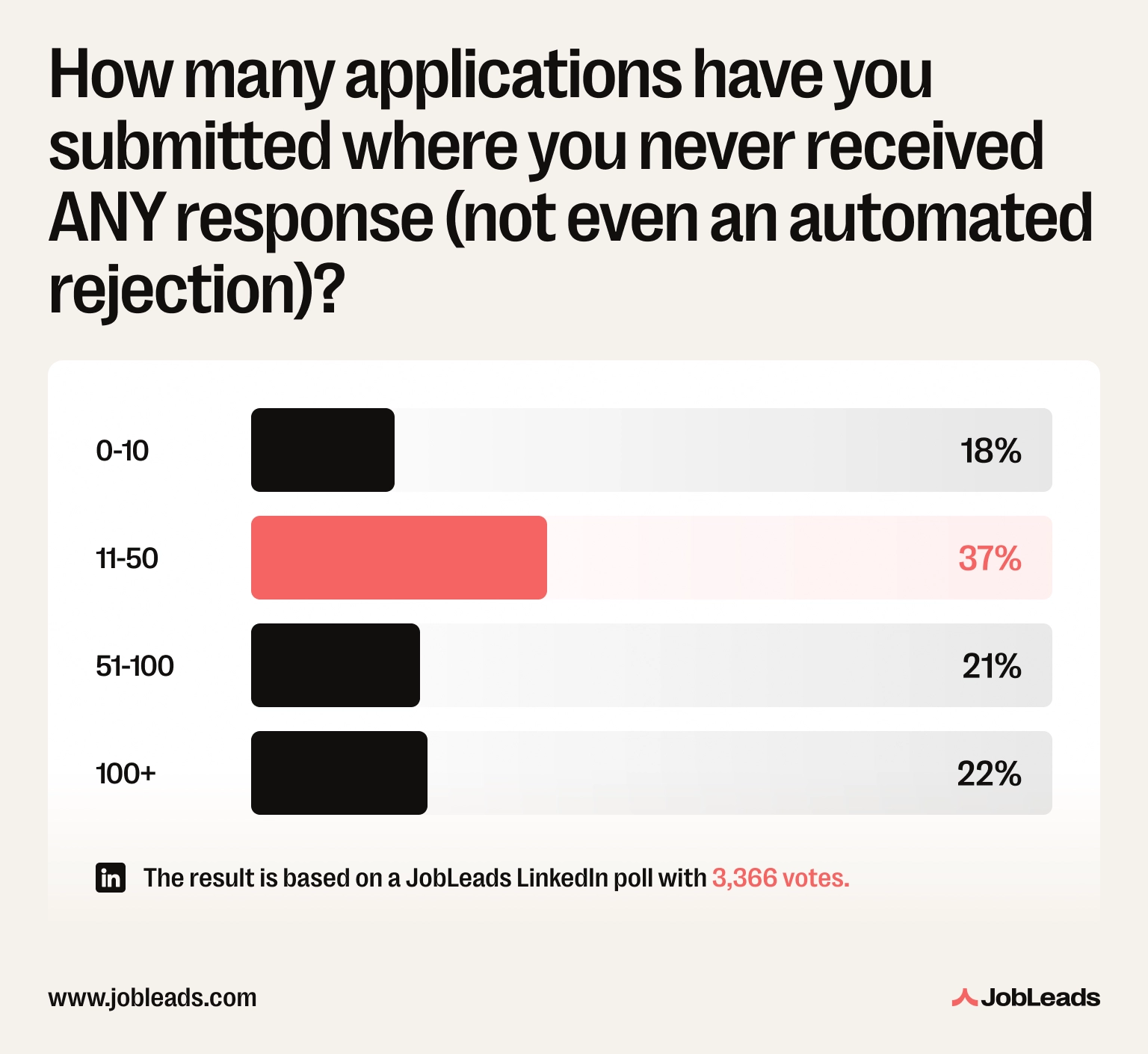
JobLeads surveyed job seekers on how many of their applications got no response at all–not even an automated "no." About 23% said over 100. Another nearly 37% said between 11 and 50.
After investing time in an interview, candidates deserve closure. A brief rejection email takes minutes to send and protects the employer's reputation far longer.
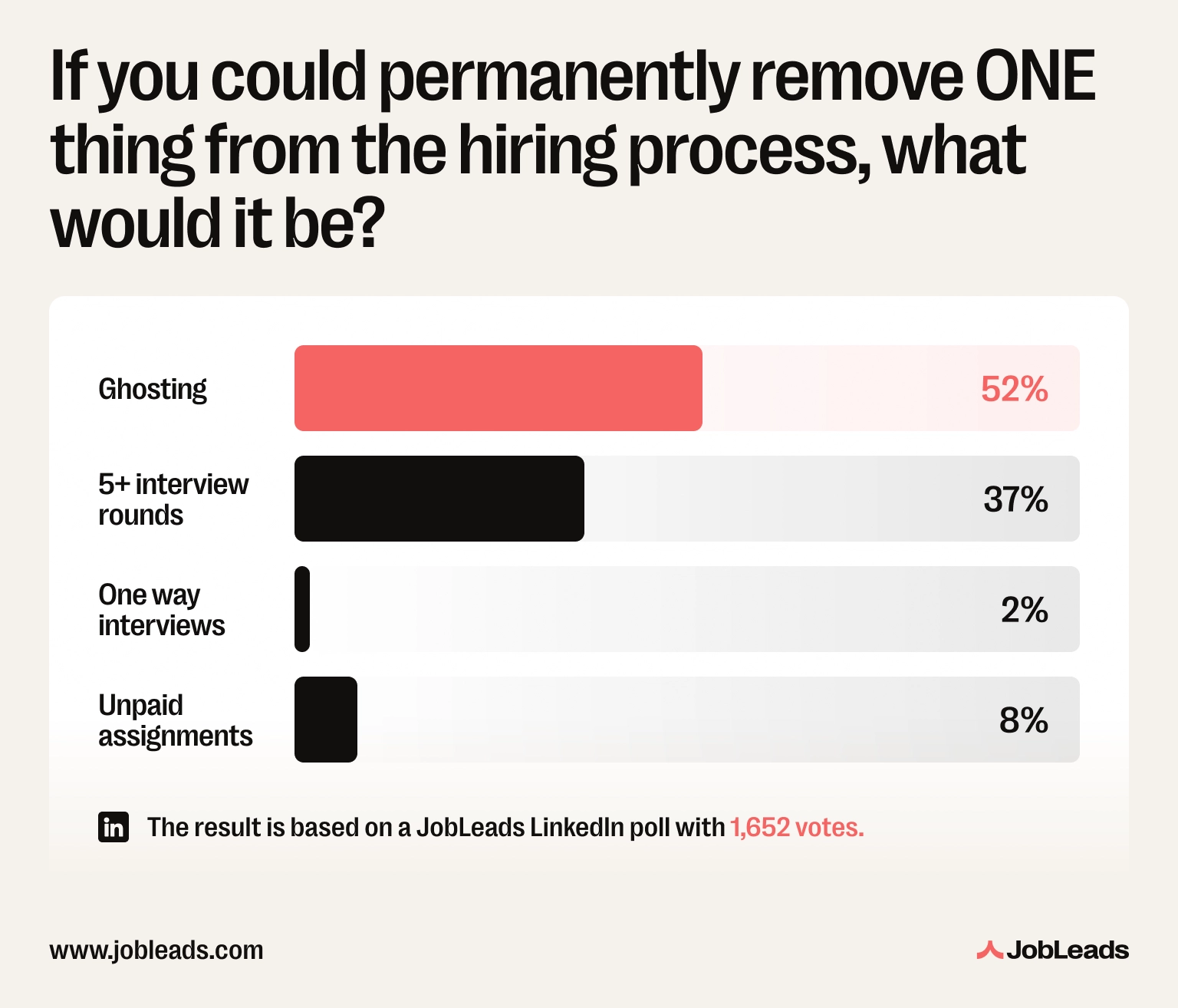
When JobLeads asked what people would permanently remove from the hiring process, ghosting won with about 52%. That's ahead of five or more interview rounds (about 38%), unpaid assignments, and one-way interviews.
The truth is: employer ghosting after interviews isn't rare behavior from a few bad companies. A Resume Genius survey of hiring managers found that about 80% admit to ghosting candidates.
So, here are the most common reasons why it happens:
About 81% of hiring managers said their top reason for ghosting was simple–they weren't sure the candidate was their "best option" (Resume Genius).
In practice, that often means they're negotiating with their first choice and keeping you warm in the background. If that offer falls through, you get the call. It feels awful but waiting is also how people sometimes land the job.
A recruiter often can't move until the hiring manager, the committee, HR, and a director all sign off. If your salary expectations sit above the budgeted range, even more approvals get added.
That's often why candidates feel ghosted by HR after a final interview. HR can't send you anything until the decision is signed off. Greenhouse reports that recruiter workload jumped by about 26% in a single quarter. A flood of AI-written applications is part of the reason. When recruiters have no news, many simply say nothing–they're only the messenger and there's no message yet.
Budgets get frozen. Headcount gets pulled. An internal candidate appears.
If you were ghosted after an interview and then saw the job reposted, the role may have been reshaped–or it was never really open. See the JobLeads guide to ghost jobs for how to spot those early.
Offers can stall even after you've effectively won, for purely employer-side reasons. Think HR handoff gaps, background-check delays, or an approval email nobody answered.
A surprisingly high number of candidates struggled with the recruiters ghosting them. In fact, a JobLeads survey on experiences with headhunters and recruiters found that about 46% of job seekers got their hopes up, then got ghosted. Only about 6% described their recruiters as knowledgeable and responsive.
Read more: If you do want to sharpen your next interview, these common job interview mistakes are a good place to start.
Ghosting happens at every stage. About 29% of US candidates have been ghosted after an initial recruiter conversation, and the same share said after a hiring manager interview. Nearly 27% said after a final interview (Greenhouse). That's a pretty equal split.
But silence usually means slightly different things depending on how far you got. Here's how to read it:
| Stage | What silence usually means | What to do |
|---|---|---|
| After a first interview | They're screening many candidates and you may not have made the shortlist | Follow up once after a week, then move on |
| After a second interview | You're on a shortlist and they're comparing finalists | Follow up after five to seven business days |
| After a final interview | A decision is waiting on approvals, budget, or their first-choice candidate | Follow up twice at most, then set a deadline |
| After multiple interviews | The process itself has stalled or the role has changed | Ask directly for a timeline and keep other options moving |
Being ghosted after multiple interviews stings the most, because you've invested the most. But it's also the stage where silence is least likely to be about you.
And most job seekers already feel the process is too long. In a JobLeads poll, about 66% said three rounds is their maximum before they'd withdraw and nearly 63% agree that two interviews is the right length for a hiring process.
Read more: Got feedback instead of silence? Here's how to read interview feedback examples and use them next time.
Here's your decision framework, anchored to business days.
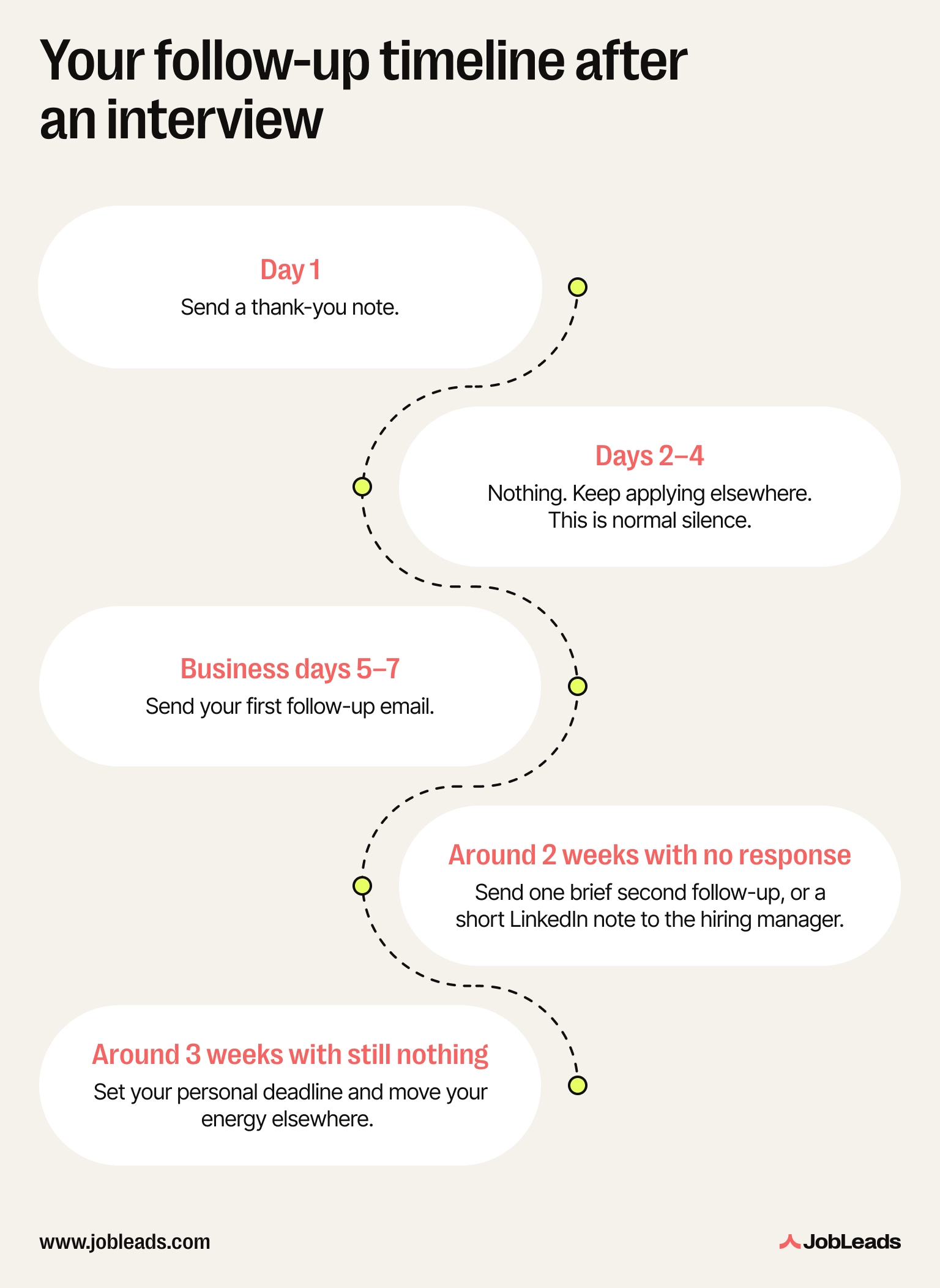
So how long should you wait to follow up after a final interview? Indeed's career guide suggests sending a thank-you email within 24 hours of the interview and waiting five business days if you haven't heard back. If they gave you a specific date, wait until it has passed, plus two or three days of buffer.
Even if you already suspect you've been ghosted after an interview, this email is your best move. Keep it short, professional, and apology-free. Skip the "sorry to bother you" opener entirely. You're not bothering anyone–you're a finalist asking a reasonable question.
Subject: Following up on [role title]
Hi [Name],
I enjoyed our conversation on [date] and I'm still very interested in the [role title] position. I wanted to check in on the timeline for a decision. Happy to provide anything else that would be helpful.
Best,**[Your name]
That's it. No paragraph re-selling yourself, no pressure tactics.
Send one more message, even shorter, after around 10 business days. Two adjustments make this message more effective:
Here's an example of the message you could send:
Hi [Name],
I interviewed for the [role title] position on [date] and really enjoyed learning about the team. I'm progressing with another opportunity and would love to know where things stand with you first. Any update would be much appreciated.
Best,**[Your name]
Why go around the recruiter? Because recruiters are often the bottleneck, not the decision-maker. The hiring manager will always know the real status first.
Pro-tip
Keep a simple tracker with the date of each interview and each follow-up. It stops you from sending a second message too early or forgetting one entirely.
Two follow-ups are the ceiling. More messages won't change the outcome.
Set a personal deadline instead: three weeks after the interview, or one week after your second follow-up, whichever comes later. When it passes, mark the role as closed in your tracker and redirect your energy. If they come back later with an offer–great, but don't lose sleep waiting for that possibility.
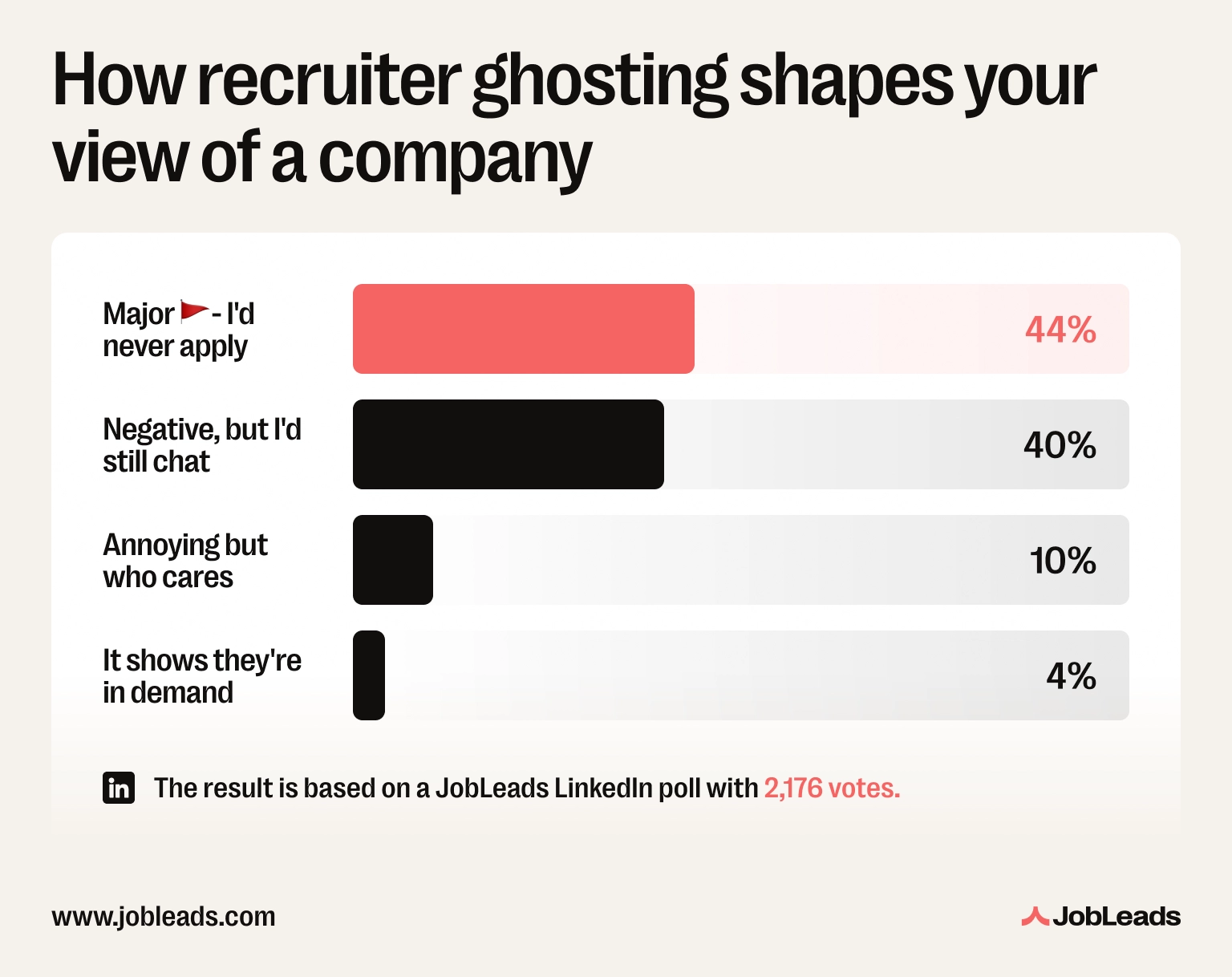
It also helps to remember what the silence says. If a company ghosted you after a final interview, that tells you something about the company–not about you. In fact, JobLeads asked candidates how recruiter ghosting affects their view of a company, about 45% called it a major red flag and said they'd never apply there. Another 40% said it left a negative impression.
And if getting ghosted after a final round interview stings, flip the evidence around. Reaching a final round means your resume works and you interview well enough to beat most people who applied. What happened next was out of your hands–budgets, internal candidates, and backup choices play out of sight.
That's why the golden rule matters: your search doesn't stop until an offer is signed. Job searches often run long. About 39% of job seekers told JobLeads theirs had lasted over six months.
Read more: Check out the guide to job search strategies on how to keep new applications moving. And if silence is hitting you earlier, start with why am I not getting interviews.
Being ghosted after an interview is frustrating, common, and, most of the time, not about you. So if it happened to you, here's what to do.
Your time and energy are worth more than one silent inbox. Keep applying, keep your pipeline full, and let the next conversation take the place of the one that went quiet.

Content & Insight Writer
Beata creates content that puts job seekers first. From practical blog advice to first-hand research studies, her writing is designed to give people the clarity and confidence to find the role they deserve.
Job SearchLearn what ghost jobs are and why companies post fake job postings. Check out how to spot a ghost job in seconds, and the best job sites to avoid them.
 Job Interviews
Discover the hidden meaning behind interview feedback! Learn how to turn rejections into valuable lessons and ace your next interview with our expert tips.
 Job Search
Maximize your job search success with a targeted strategy. Learn the 6 Pillars of Job Search Excellence to find opportunities faster and land your dream job.